


Aeolian Islands / Sicily
You can fly to Sicily either via Catania or Palermo. Both are still quite a distance from the charter base. The train connection from Palermo is advantageous, from Catania I only got to my destination with TrenItalia via a few changes. The advantage is that you can immerse yourself in the Sicilian way of life. If you want a quicker journey, you can take the shuttle bus.
This time my home for the coming week was a Bavaria cruiser 41. I have never had such a small yacht in my commercial sailing career, and the occupancy options were exhausted, my space in the saloon or on deck. However, the first contact with the crew was so pleasant that I could do without privacy.
After checking in, shopping and deciding which direction we were heading in, it was clear that we were going to the Aeolian Islands, which were around 20 nautical miles from our charter base. Although I had gathered some initial information, I didn't realise at this point what awaited us there.
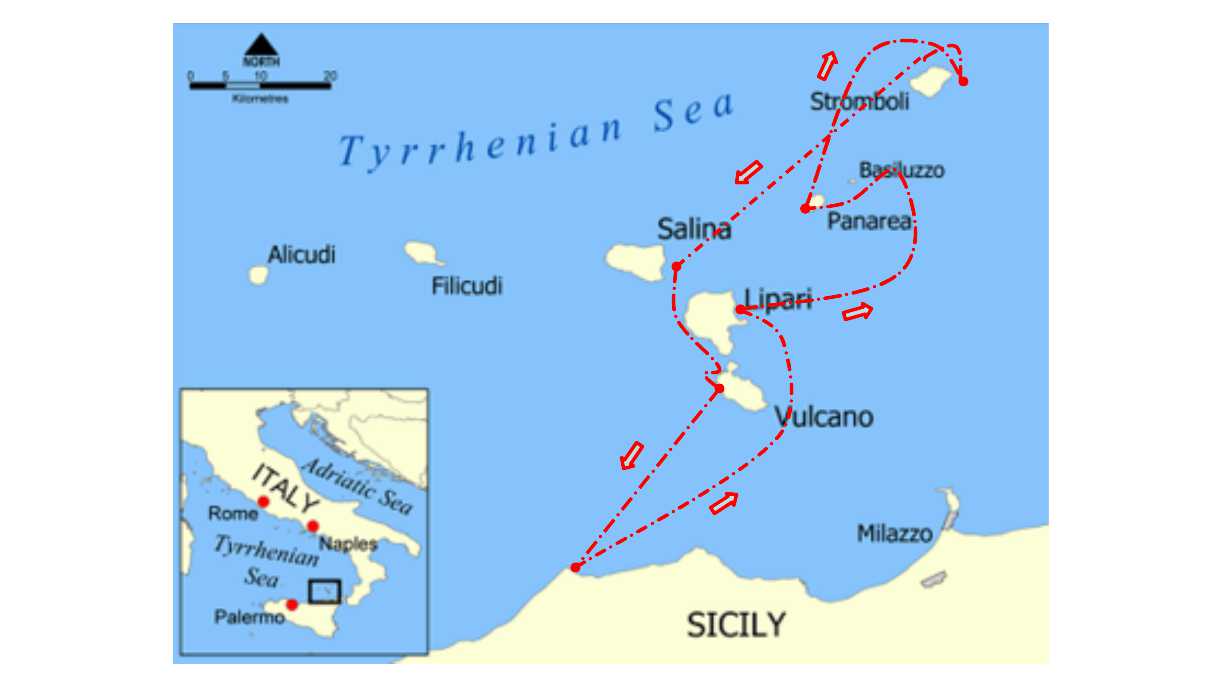
Once again I'm travelling in the Mediterranean for Windbeutel Reisen, and once again in an area that I hadn't sailed before. The journey to the Capo d'Orlando base was a little more complicated, but it was worth it.
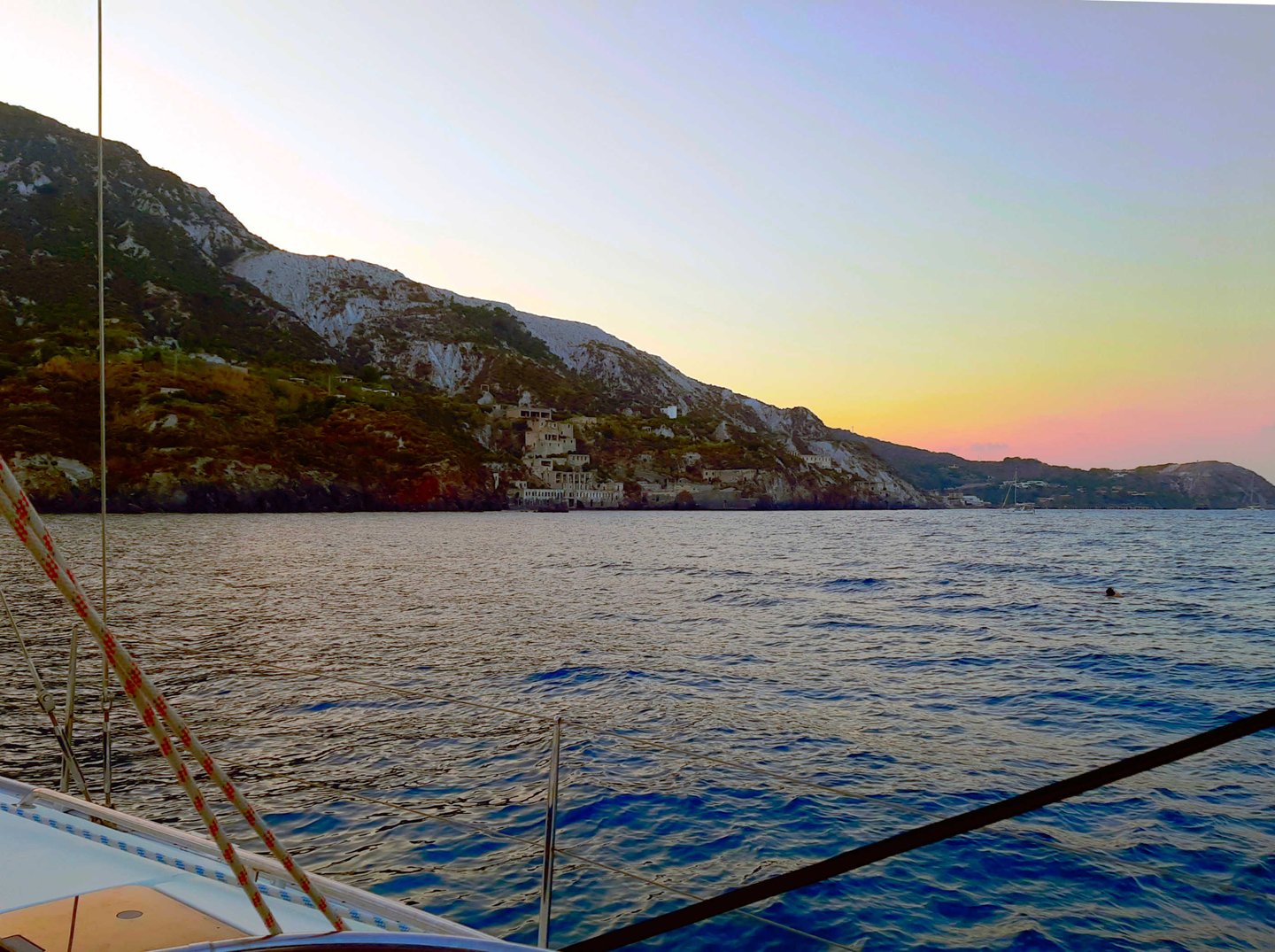
However, this is not so easy, the water depth quickly rises considerably and despite the low season, there are quite a few boats around us. We didn't really like it there either, so we moved on one bay to a picturesque place. In the past, pumice stone was processed in the factories on land, but now there are only industrial ruins to be found. There's plenty of space, we drop anchor and can start our first cosy evening cruise. On the second trip, we called at the Marina di Porto Pignataro. 80 euros for a permanent berth including water and electricity is more than fair. There is also a free (!) minibus shuttle to the town.
We like to walk, but I can't recommend this narrow road with no alternative route for pedestrians. The shuttle also only takes 5 minutes. Lipari is well worth a visit. Nice restaurants and lots of shops line the main street. As we were very hungry, we quickly ended up in a good restaurant. So I couldn't explore how far this beautiful area extends or whether it is actually just this one street that attracts tourists.
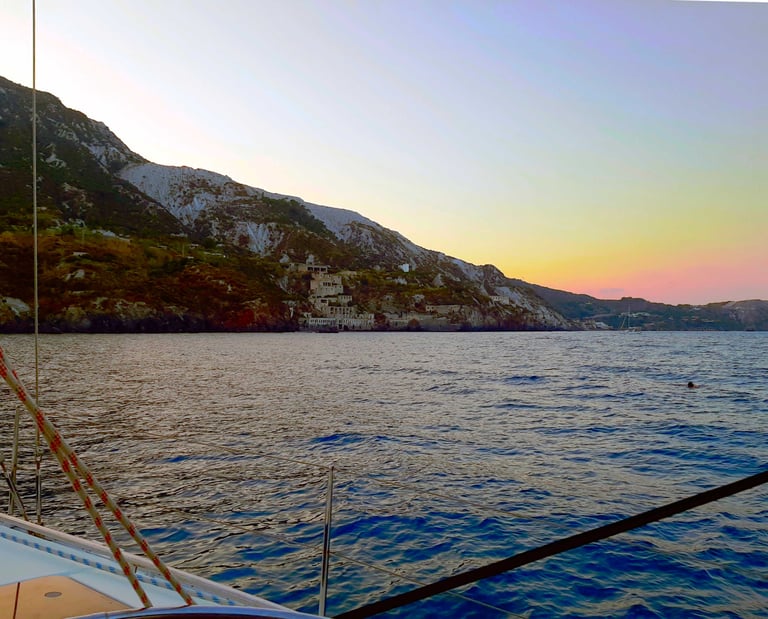
The wind is in our favour, the sails are set and we can see our destination on the horizon right from the start. Despite a rather worn out headsail, we make good progress and it's time to look for a place to spend the night. Navily is the usual good counsellor for this, Lipari is the largest island in the group, so we look for an anchorage off its "capital".


The eruptions of Stromboli, which can be seen in the distance from our anchorage, are fascinating at night. It was here that we realised why this volcanic island is also known as the lighthouse of the Mediterranean.
It's clear that we have to see this up close, but we have planned a stopover. We reach Bottaro in the early afternoon, surrounded by 2 small islands and with rising sulphur bubbles under the water. It's busy, but a yacht leaves its mooring shortly before we do. We have to grab it straight away, even if there are more pleasant places to drop anchor. The depth gauge doesn't even show 5 metres and what we see underneath us are pronounced stones. The anchor holds there reliably. Hopefully it will come up again just as easily. It's certainly a terrible place for an anchor pedant. But beautiful!
After a successful anchor up manoeuvre, we head for our overnight spot, Cala Junco. We respect the protection zone and find a nice bottom. We can bury the anchor well there, the wind dies down, so that after a tasty meal the evening ends in the usual way.
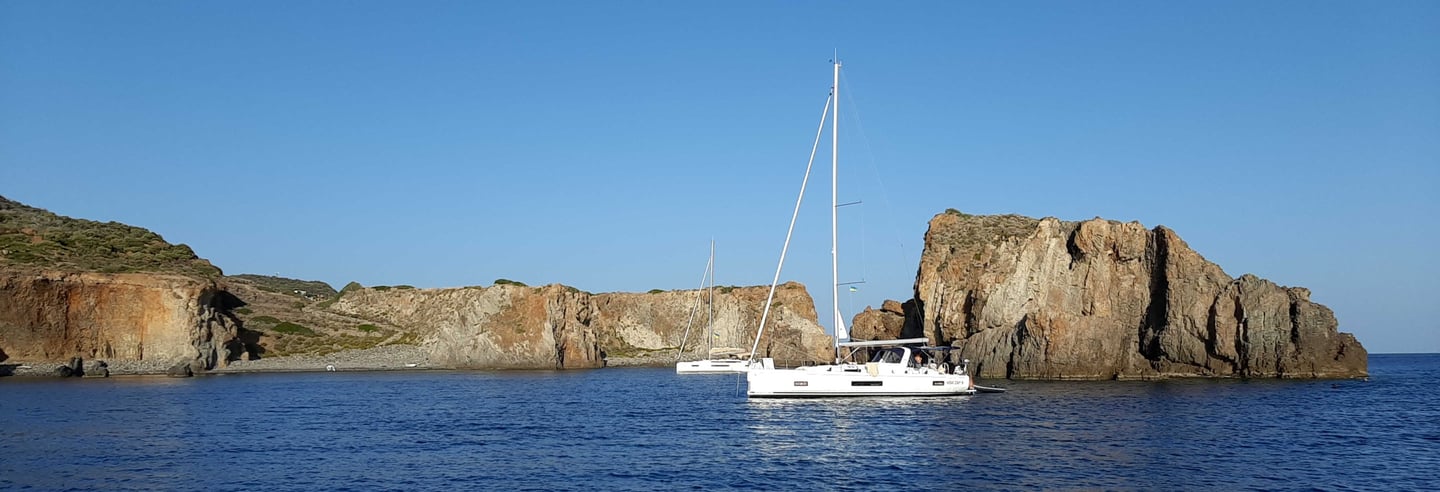
The next morning we want to leave our anchorage in a westerly direction, passing Panarea.
Cock crows put an end to our sleep at 4 o'clock in the morning, no idea where they were hanging around. There is no settlement there, so hopefully they are free to roam the island.
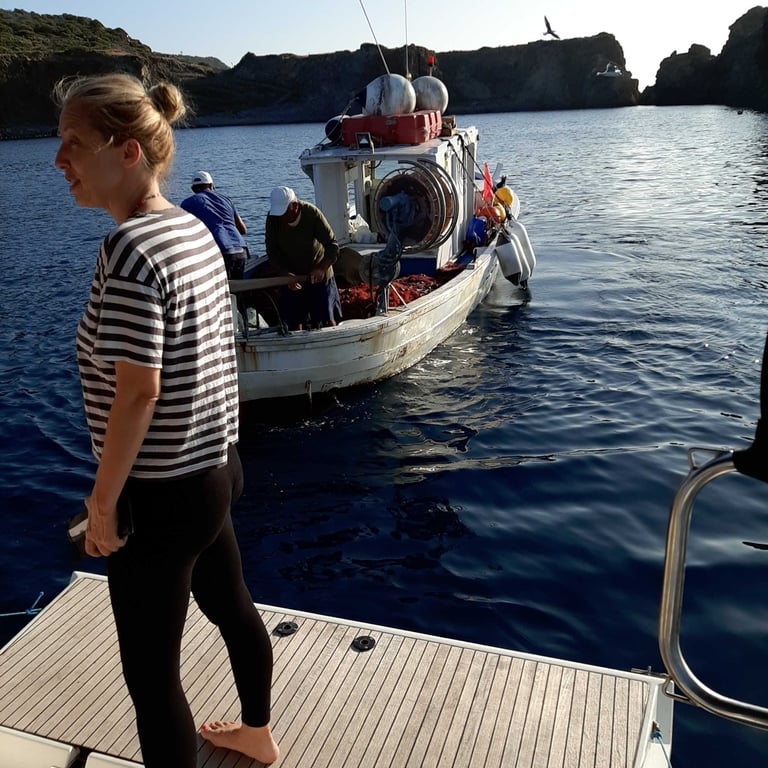
Shortly before anchor up a chugging fishing boat comes up to us and wants to sell its fresh catch. Now that's a delivery service. The fish are gutted on site and shrimps are also included in the delivery, which heightens the anticipation of what will hopefully be an interesting evening in an even more interesting place. Stromboli rises up in front of us and greets us with frequent ash eruptions. An incredible spectacle. We sail around the 2 nautical mile protection zone, although not everyone thinks this is necessary. As a reward, a few dolphins accompany us to our buoy.
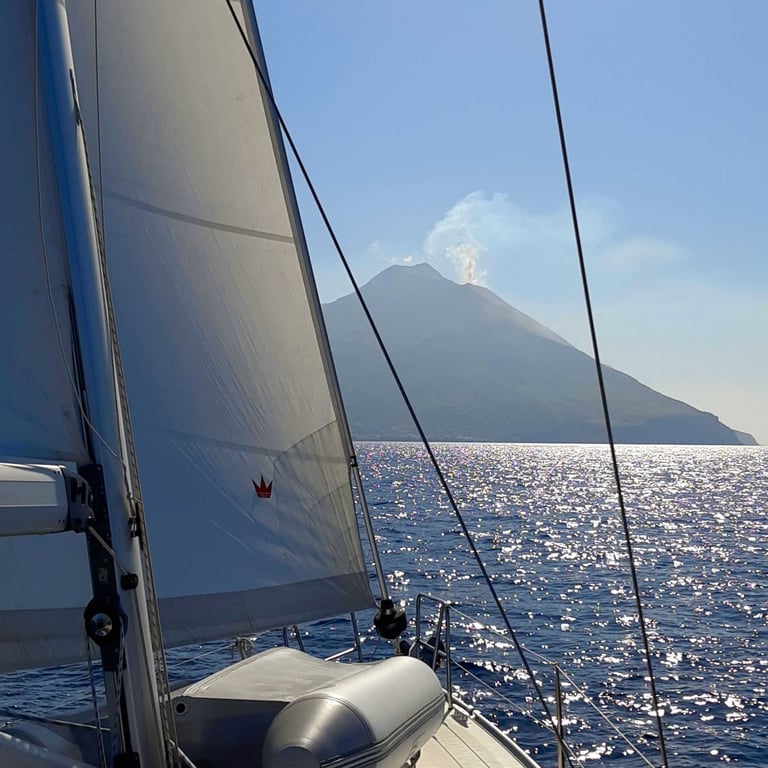
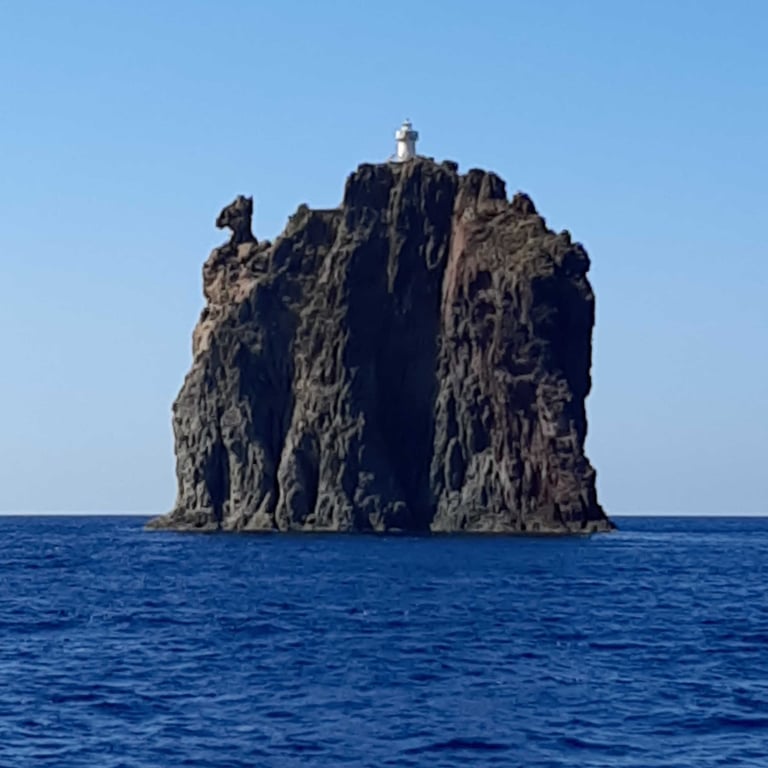
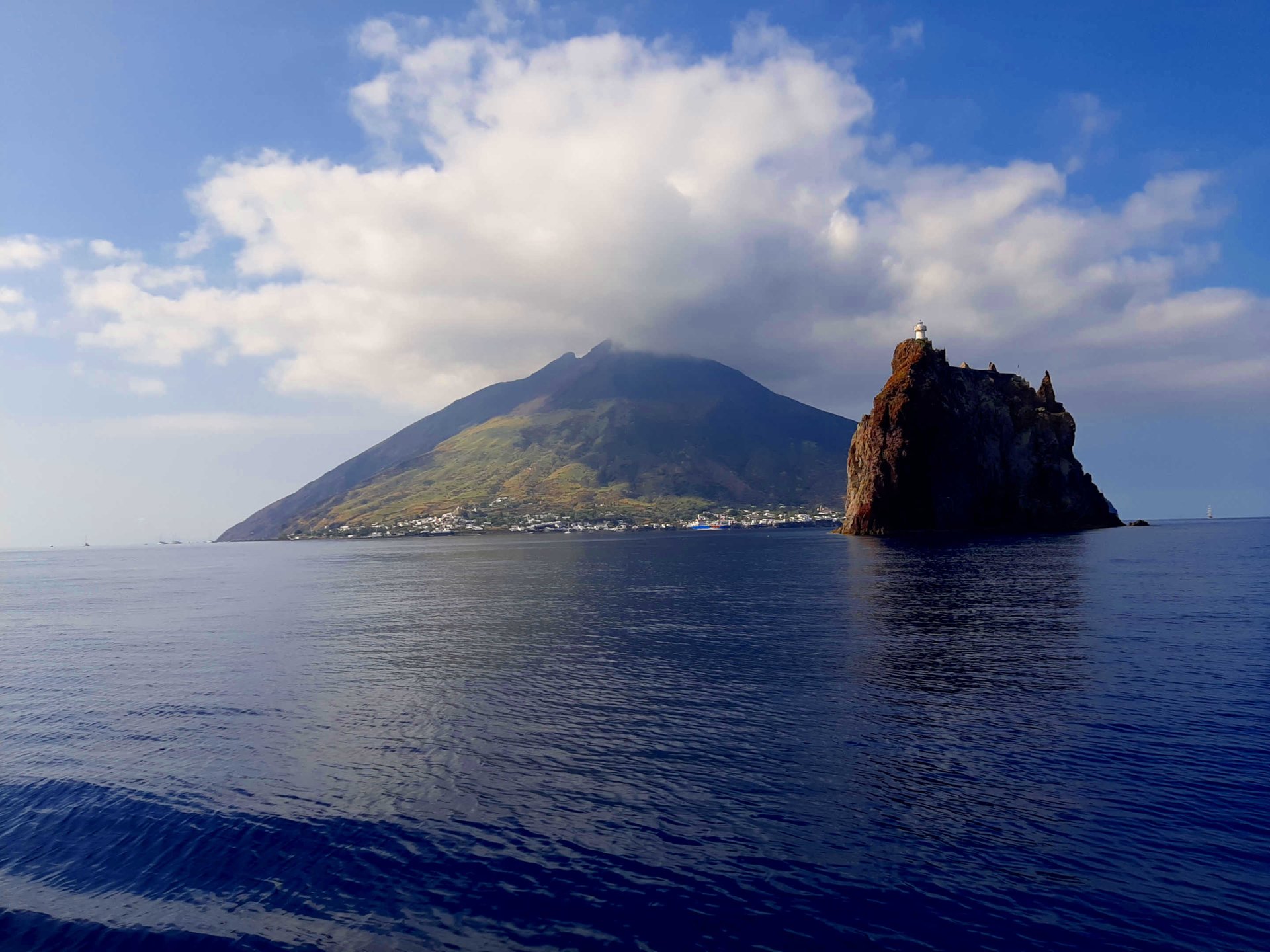
We have to cover the distance under motor, the wind has dropped back, but comes up just in time when we reach the mooring. We quickly informed the marinero, who wanted to help us moor, that we wanted to take advantage of the wind for another hour. Further north, the Strombolicchio piles up. As I learn later, these are the remains of the original volcano. It is the extremely hard rock of the lava column, the rest has been eroded away by the ravages of time. So I take a walk around and give free rein to my interpretations of which figures the stones represent. Some recognise Alf.
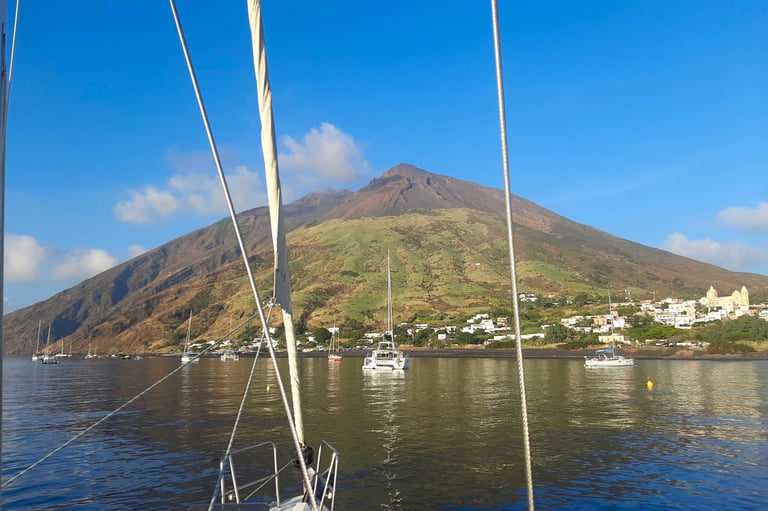
We announce our sailing yacht called Marina (who actually assigns such ship names? Marina Stromboli, this is Marina). What will the marinero on the radio think of that? Oh yes: For the diligent radio licence graduates, this is the abbreviated form of my recording of the radio contact. The use of formalised communication from the theoretical lessons is not always expedient or desirable. A marinero wants to be able to deal with things quickly and does not want a detailed repetition of what he has previously been told. After all, he is not Bremen Rescue and an emergency roll is not required for a simple mooring at a buoy...).
The friendly marinero guides us through the buoy field and the numerous moored yachts to our berth. The strongest gusts we've experienced all day are just coming up, and Marina is already a little sensitive to the wind and weather. However, we are exactly in line with the buoy and can quickly thread in the two mooring lines. The successful manoeuvre is acknowledged with a perfetto. That's nice to hear.
Half the crew want to see the place on the island, so we get into the water with the dinghy and off we go. We don't want to put our dinghy on the black beach, but there is still a mooring option with a jetty jutting out into the water. We secure a place and then head ashore. I hadn't expected so many excursionists to meet us, but the ferry was just approaching (I guess you could say that about a hydrofoil ferry).
We take a tour of the town and are fascinated by its flair. Maybe it's just me who feels that the threat posed by the volcano conveys a completely different understanding of everyday life. Of course, I could just be imagining it. In any case, it's one of the most fascinating places I've ever travelled to.
Back at the dinghy, we are informed that our chosen landing spot is intended for the marineros. So we quickly switch on the outboard engine and clear the spot. The only problem is that the engine won't start. Marinero Giovanni not only helps with mooring, but also with starting the engine. It feels a bit embarrassing that he gets it to start on the second attempt.
But the fact that you have to turn the gas tap all the way up - I've also had bad experiences with that, because then nothing worked at all with the engine stalling.
Due to the current high level of activity on Stromboli, it is currently not possible to climb to the summit. Visitors can climb up to 290 metres and take a look around the edge at the "Sciara del Fuoco". This is the part of the volcano where the lava and ash is transported towards the sea. With a guided tour, you can even climb up to 400 metres and have a good enough view. On my second sailing trip, I opted for Magmatrek. 25 euros for a 5-hour tour with lots of explanations about Stromboli is definitely worth the price. However, you shouldn't underestimate the hike. There is a lot of up and down in the terrain.
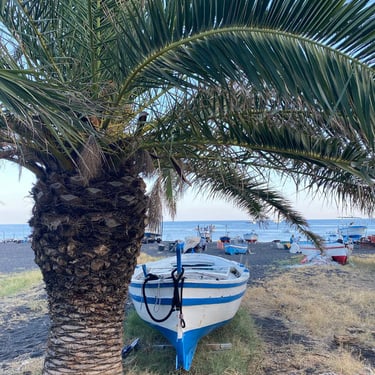
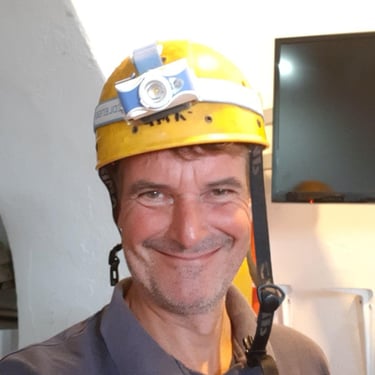
And the path is not paved, in some places it looks a little steep. However, the descent in the dark is particularly difficult. A headlamp and good shoes are a must. If necessary, these can be hired from the trekking shop next door. The tour started at 4 pm, but this depends on the amount of sunshine. A view of the eruptions in the dark is particularly impressive!
As beautiful and safe as the mooring at the buoy is, you can't really see the eruptions there as there is a ridge of the volcano in front of our field of vision. That's just a shame... and unfortunately I was only able to correct it on the next trip. An anchorage on the northern edge of the beach is more suitable. However, this is also where the water tanker regularly moors to transport fresh water to the island. After all, it hadn't rained there for four months. We are warned to leave our mooring in the morning by a very loud ship's horn.
Salina is our next destination and we bid farewell to Stromboli. However, we choose our anchorage so that we can still take a distant view of the evening spectacle. Below Capo Faro is a good anchorage. The water here is shallow enough for anchoring, the view of the cliffs is impressive and the swell from the many ferries subsides towards evening. Naturally, it is also a good place for swimming.
Salina itself is reminiscent of Ometepe in Nicaragua. An island with two volcanoes that are no longer active. We circumnavigate the island on the north side towards the west to take a look at the arch in the rock (Arco Naturale di Punta Perciato), which is also mentioned in the travel guides. The anchorage next to it is picturesque, but the subsoil is not without its pitfalls due to the prevailing depth. We have another destination anyway.
It was already clear in advance that the Vulcano Ponente anchorage would be well frequented for the next tourist highlight. The time at 3.30 p.m. was chosen wisely, as the first boats were leaving the anchorage and the overnight guests had not yet arrived. The crew set off for the island in the dinghy, this time I stayed on board.
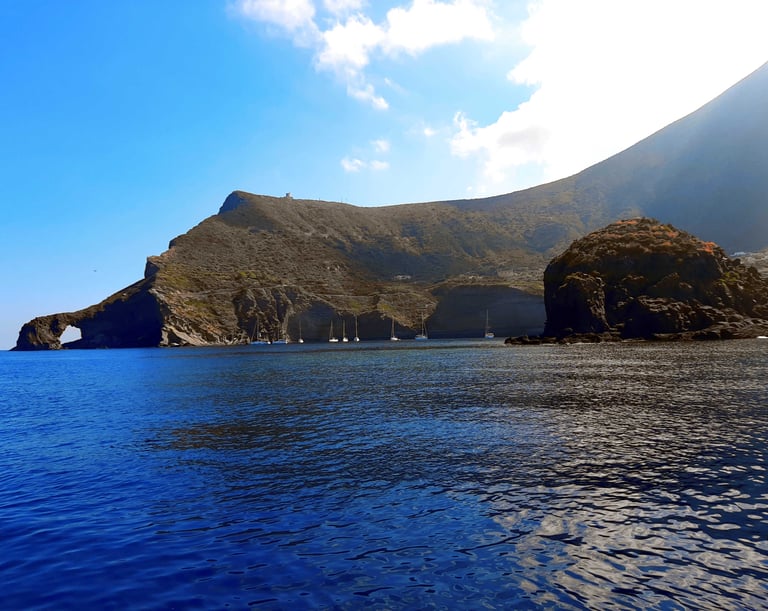
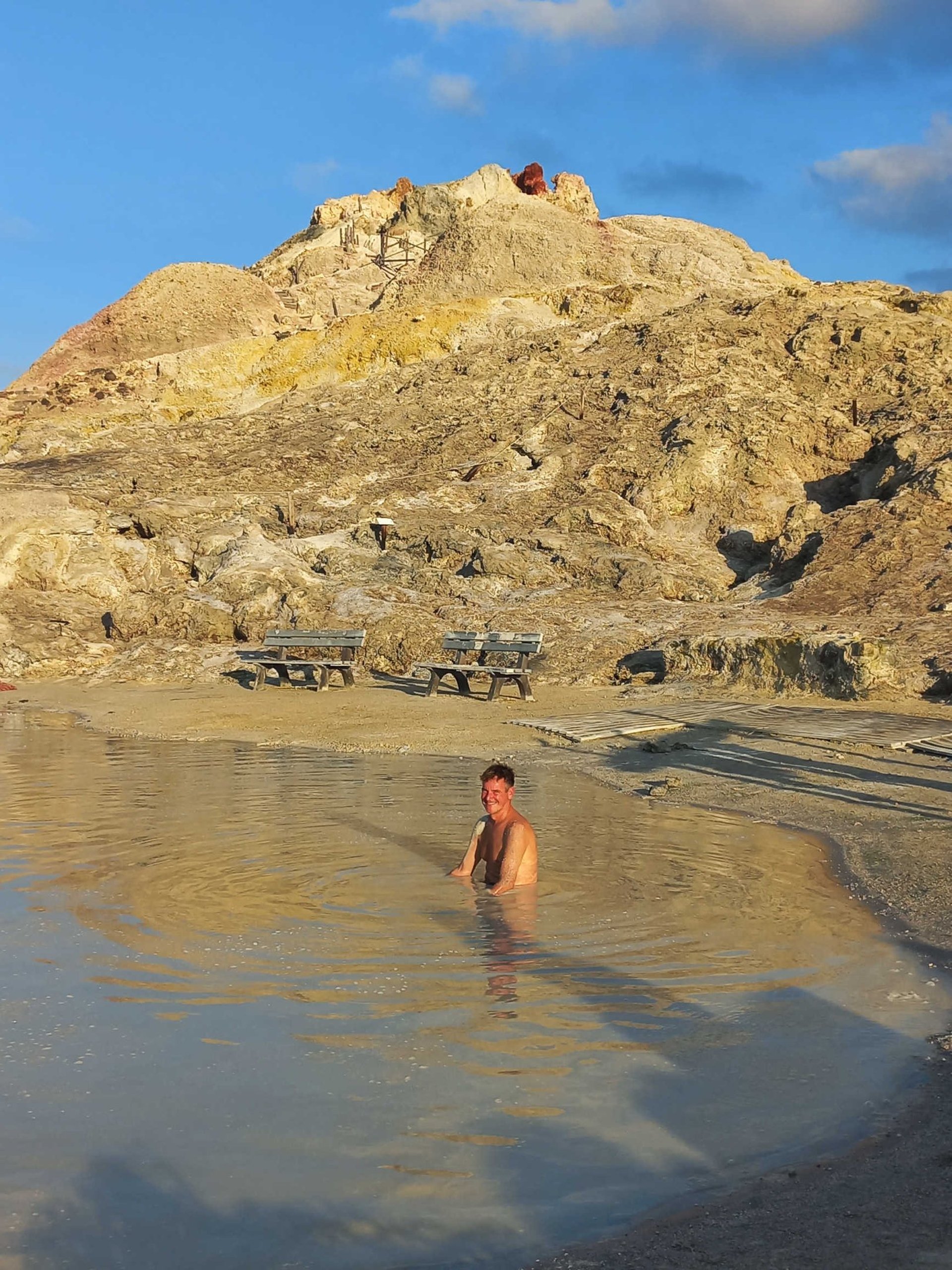
On my return, I didn't realise that the visit to the mud bath was so impressive, but I was able to catch up on that the following week. Wonderfully smelly, the smell of sulphur describes it more pleasantly than it is, and hot air bubbles that continuously provide a more than cosy warmth make this place so special. And you have to visit it as soon as possible. A fence barrier, which is not really an obstacle, and a construction board documenting the impending outrage make it imperative to hurry. The mud baths are to be covered by a temple of wellness that gives no hint of what a marvellous natural spectacle it is. Some people come up with ideas that just make you shake your head.
The descent into the sea is almost even more beautiful. Here, too, it bubbles and gushes like a whirlpool, although the rising bubbles are no longer as hot as in the mud. But a view of the bay with the island towering behind it with beautiful vegetation... What a special place.
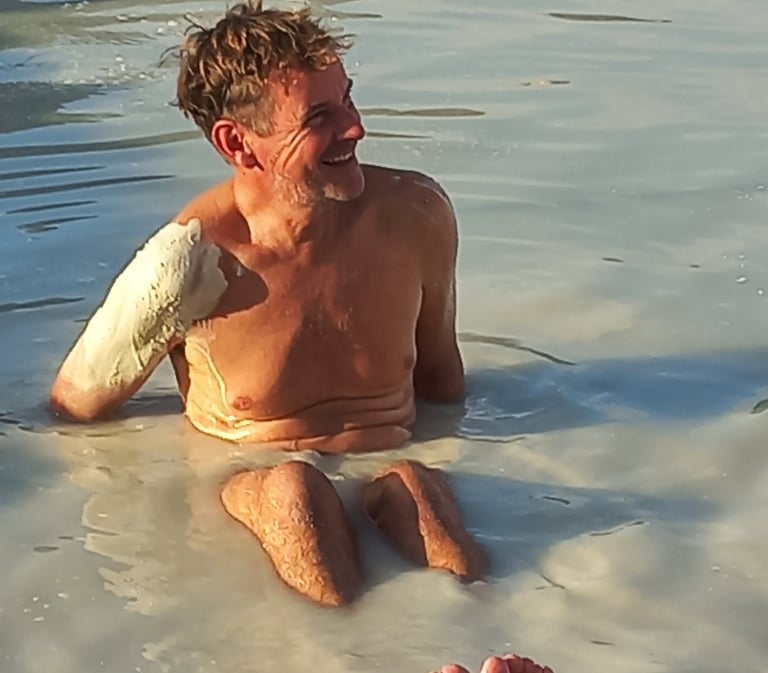
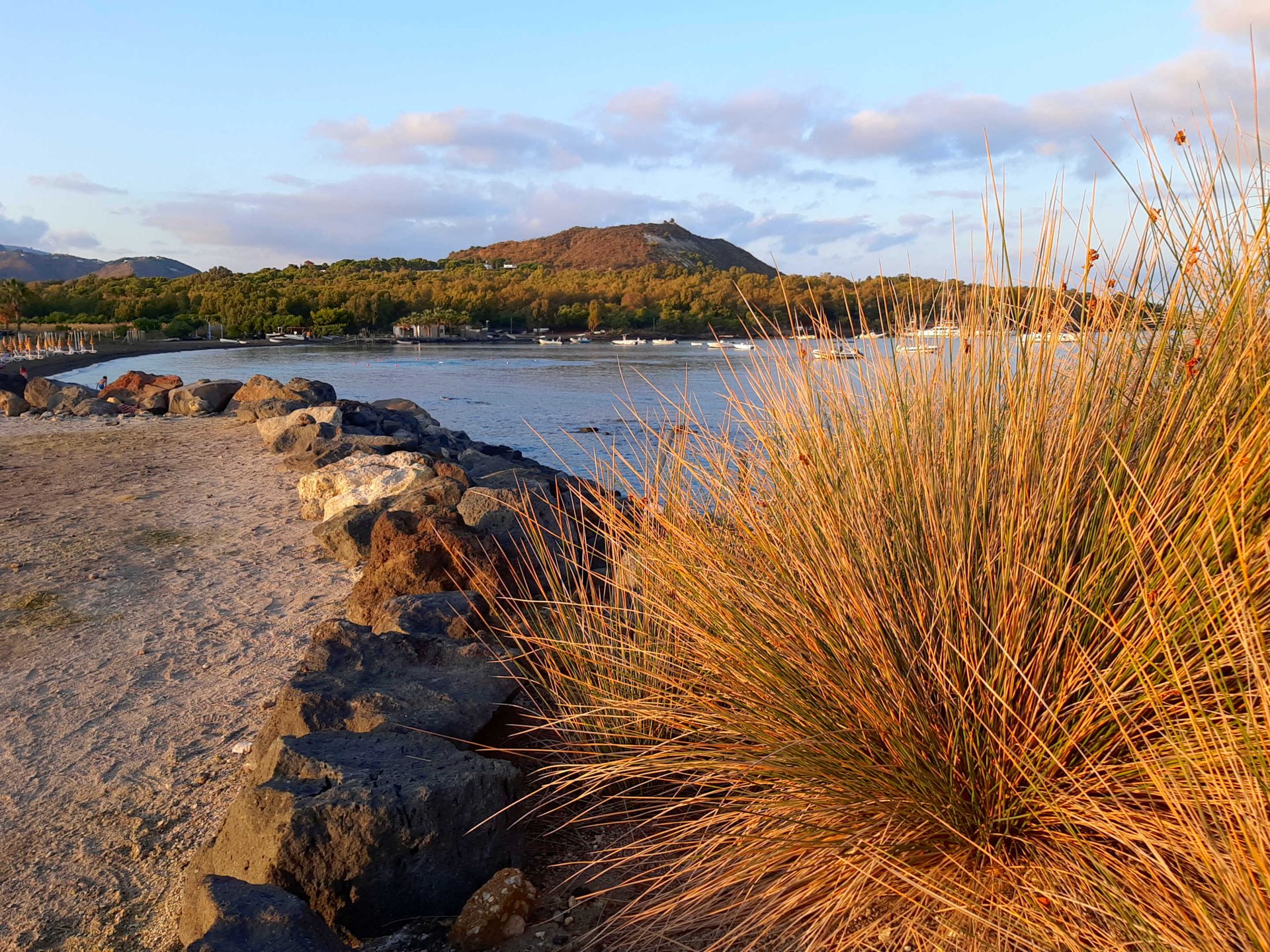
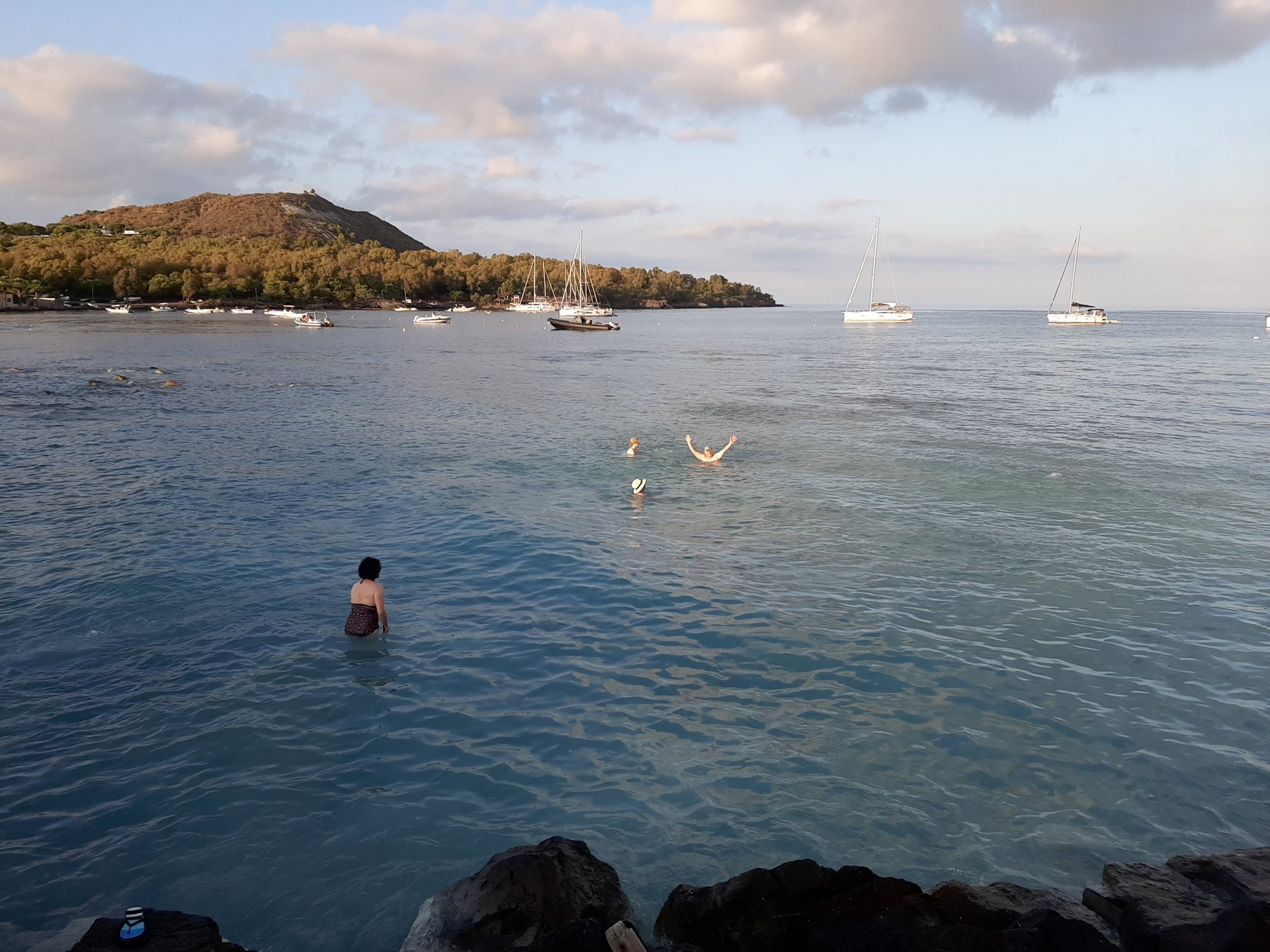
At 5.00 pm, one boat after another comes into the bay and it's time for us to look for a quieter spot. One highlight of the Aeolian Islands is still to come. The Grotta del Cavallo and the Baths of Venus are right next to our anchorage. This time we take more time to drop anchor. The wind picks up a little in the evening (it should have done so during the day) and there are lots of stones lining the anchorage. But our patience pays off, we find a small patch of sand where the anchor can dig in, then we lay a shore line as we have moored between two other sailing boats and don't want to swing in their direction. Not an easy manoeuvre in a crosswind, but one that is routinely carried out. Great!
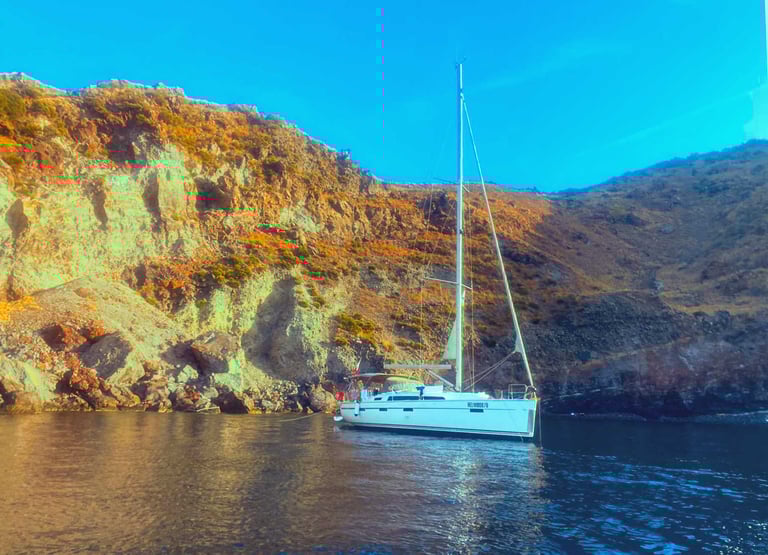
After the obligatory swim and a great dinner, we enjoy the peace and quiet... Until this is interrupted by bloodcurdling "ouch ouch" screams. Suitable for any Halloween night. What's that screaming so loud? At some point, we catch sight of the culprits in the torch light. They are white birds, but their wings are narrower than those of ordinary seagulls. I'm still not sure who we were dealing with. But the "songs" of the Cory's Shearwaters (Calonectris borealis) sound very similar to them.
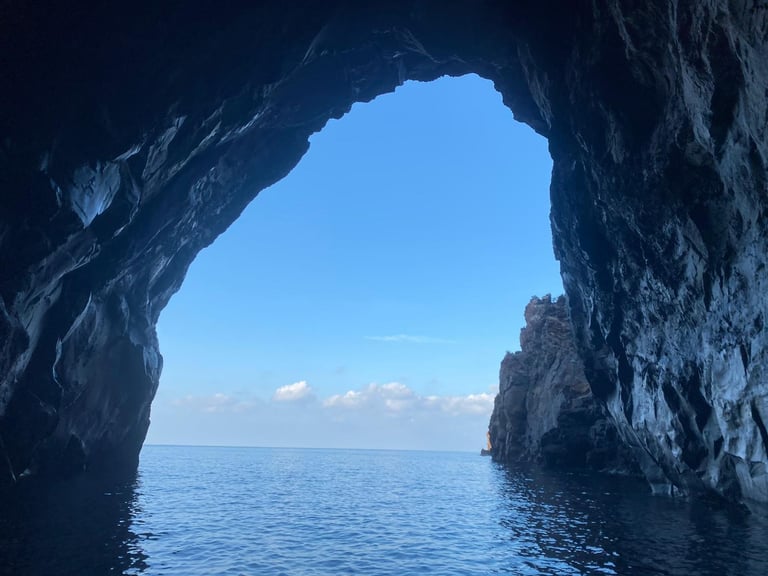
In the morning, we board the dinghy with almost full occupancy to visit the grotto. All alone and not yet surrounded by excursion boats, we drive a little way in. It is spectacular, but soon sobering, as the further entrance is completely blocked by large basalt stones. Maybe you're not supposed to drive around in here, as the stones at the bottom have fallen from above at some point. So we head out again, now to the Venus Baths. We take a quick look at it, nobody jumps in and is rejuvenated for 10 years. The following week, some of our fellow sailors did this, but at least their outward appearance hadn't changed. Maybe that will come later...
Back at the boat, we are confronted by a number of incoming ships that have embarked on adventurous anchor manoeuvres. I had never practised this before this trip, but have now really adopted it for future trips: Laying a triple line and a fender on the anchor gear. If it gets snagged when catching up, you have another option, but above all the other yachties can see where our anchor is. I'm not interested in tangled chains in a narrow bay without much manoeuvrability.
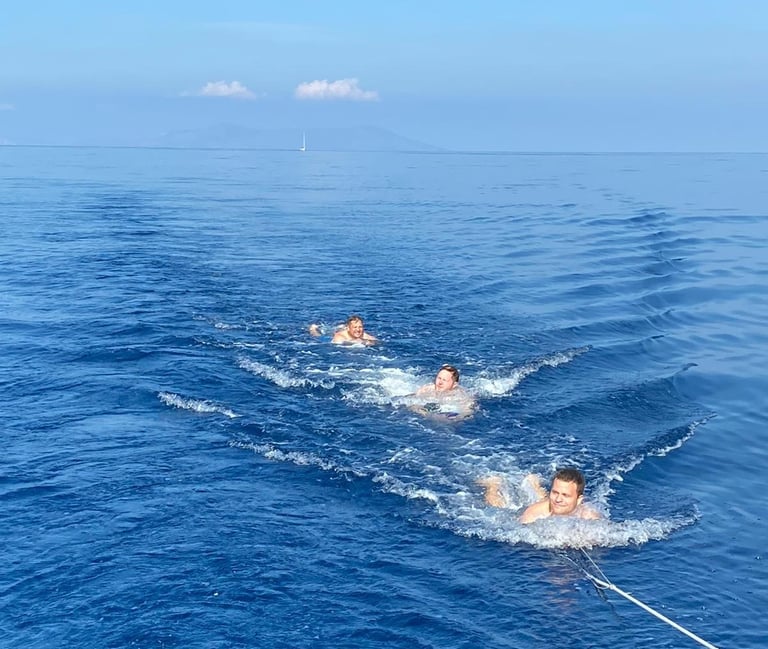
On to the last stage. No wind again during the day. To avoid boredom, we throw a line with fenders in a row into the water just before the end. Then we jump in and let ourselves be pulled along. So far, I've only done this on family trips for the little ones. But it means that we can increase the speed considerably, as it shouldn't be too much fun. After 10 minutes, the time would have come to get the brave swimmers on board, but a catamaran is lying on the water in front of us and a lady in a skimpy bikini is indulging in her passion for taking overacting selfies. Let's show the tattoo pumpers on board what real blokes can do. It took a while for the Katis to realise our spectacular action, but then the response was clear: what heroes there were in the water, being loudly admired!
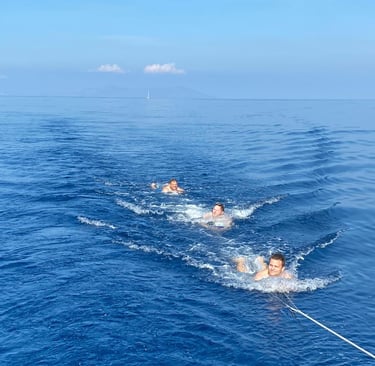
A great week comes to an end. And we have got to know an interesting area on a trip that will not soon be forgotten.
Contact
Write me
+49-162-5401120
© 2026. All rights reserved.
Social links? No Facebook, no X, no Instagram. These platforms have no place in my world.

Google Ads and Google Analytics free site!