


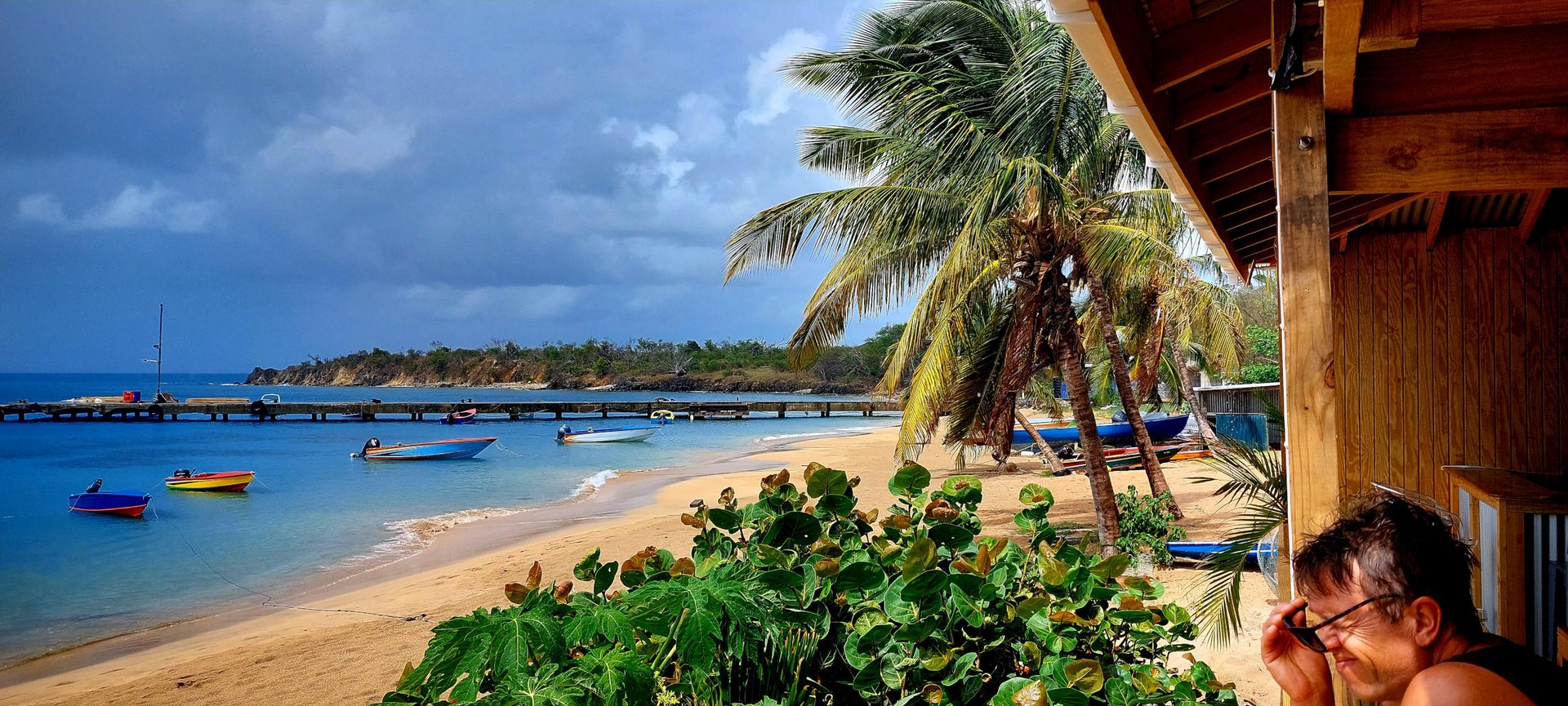
The Windward Islands
Travelogue Caribbean - Windward Islands 2025
Travel Information
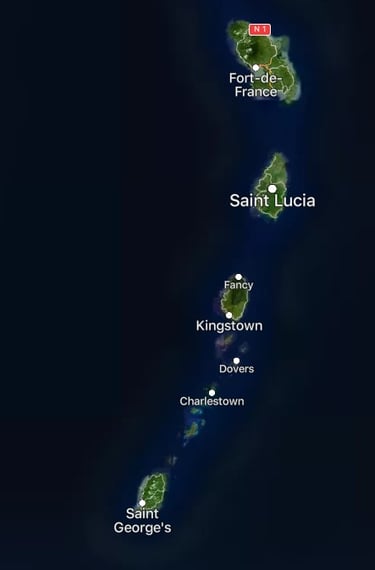
Air France operates a daily flight via Paris Charles de Gaulle to Fort-de-France. High humidity and temperatures nearing thirty degrees await us in Martinique. Before heading to the bay and the marina at Le Marin, we spend our first night in the island’s capital. Strictly speaking, it is more accurately described as Martinique’s main town; as a French overseas department, it is thus referred to as the chef-lieu. It is the largest city in the Lesser Antilles, which are in turn divided into the Leeward and Windward Islands. Our journey takes us to the southern edge of the Lesser Antilles, which stretch as far as Grenada.
I like to spend my first night right in Fort-de-France. Unfortunately, the last bus leaves at 6.30 pm, but I take a taxi with a few fellow travellers to Place de la Savane. This is the heart of the capital, offering plenty of places to have dinner and enjoy a variety of musical performances. It’s a brilliant way to immerse yourself in the Caribbean way of life. Another advantage: the 30-kilometre journey to Le Marin harbour by taxi is considerably more expensive. Depending on your bargaining skills, you can expect to pay between 120 and 200 euros.
I prefer the bus route. On Saturday morning, you first take city bus line B from the Caraibes stop, west of Place de la Savane, to Mahault. You can book a ticket via the Martinique Mobilités app, which is even available in German. From there, the EXP3 bus takes you a short distance to Le Lamentin, before the next bus, the EXP1, goes directly to Le Marin.
The trip takes two hours in total, but you can honestly say you’re off the beaten track. For the most part, we come across locals. I love the fact that when I ask if this is the right bus stop, I don’t get a simple ‘oui’ or ‘non’ in reply, but helpful, detailed directions that are way beyond my French. Smiles included!
It’s just a short walk to the harbor, and you’re already at the VPM Bestsail charter office. Along the way, you pass the impressive sailors on the traditional Yole Ronde boats. For nearly 20 minutes, I watch in awe as the boats are made seaworthy and hauled acrobatically out into deeper water using wooden booms.
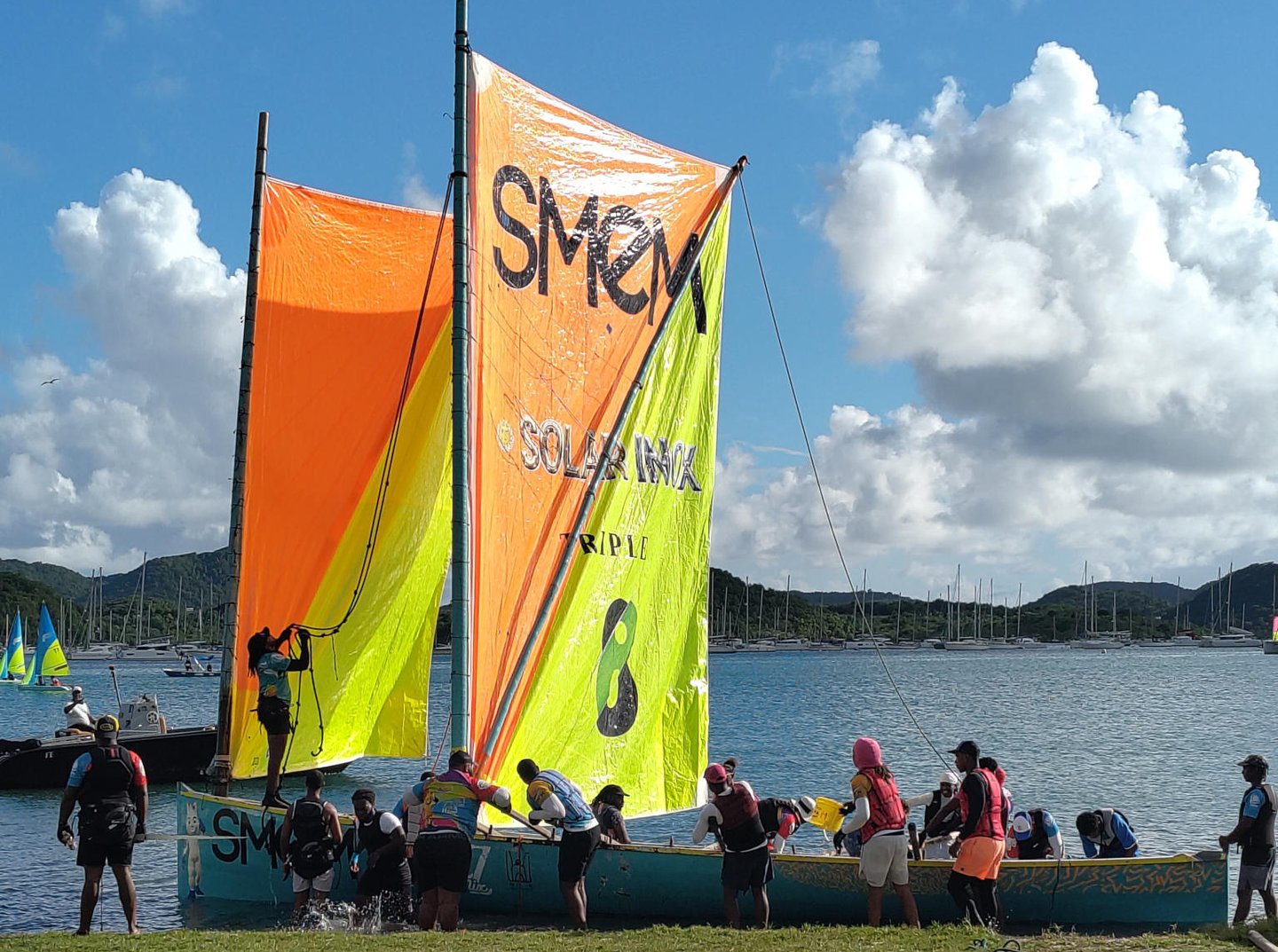
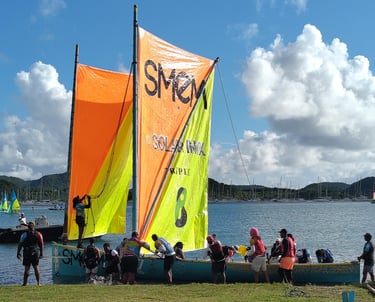
Harbour Le Marin on Martinique
From the dock—conveniently, VPM Bestsail uses the very first one: yachts as far as the eye can see. At this time, there are well over 1,500 vessels at this location; most are anchored in the expansive area or moored to a buoy, while the marina’s docks can accommodate 800 yachts. Our charter catamaran, a Lagoon 42, is also moored there.
The handover is surprisingly straightforward, as the charter company VPM Bestsail employs a German-speaking fleet manager. After doing some shopping at the supermarket – which, although not exactly nearby, has everything we could possibly need – and an interesting journey back with our fully loaded trolleys, we’re all set for the next few days.
We’ll go through the mandatory safety and boat briefing the following morning. When the sun sets over the Caribbean horizon, it gets dark almost instantly, so we prefer to round off the evening in a restaurant. Unfortunately, Le Mango Bay bar is closed in December 2025. It’s a real shame, as the get-together for German sailors and expats was still held there on Fridays last year. But even aside from that, there are a few restaurants where you should book in advance, especially for larger groups.
We do our shopping at the Auchan, which is ‘almost’ nearby. Yes, walking across the marina with several shopping trolleys can be a bit of a hassle, but it can also be great fun. It’s all down to your attitude!
At 9.00 am we’re at the jetty of the small customs clearance office, which is located in the petrol station building. Good preparation is highly recommended. The French keyboard is quite different from the German one we’re used to. However, you can enter almost all the details in advance and then simply print out the declaration. I’ve described how to do this in detail in the Clearance Document, which can be downloaded here (at this time only available in german language). Once you’ve paid the five euros, you’re all set: set sail!
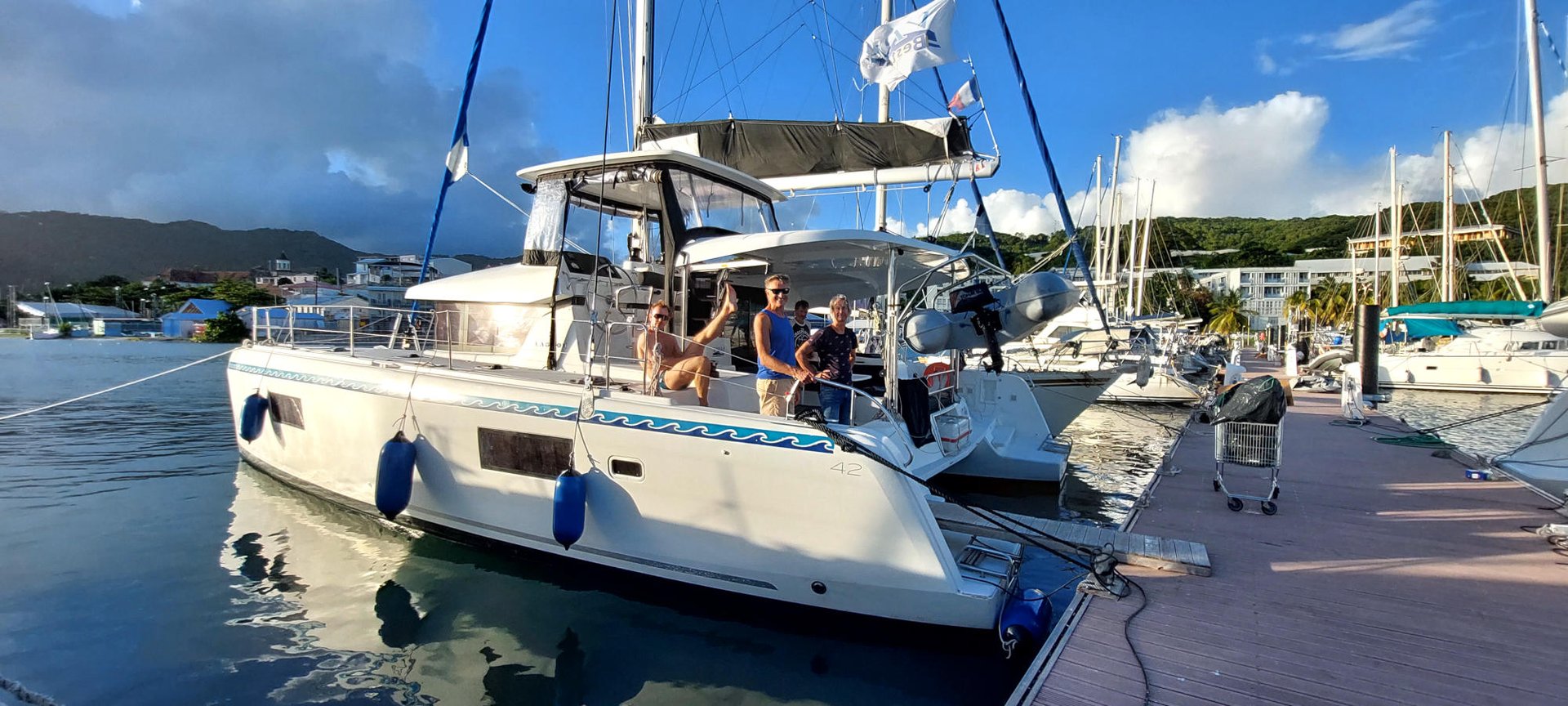
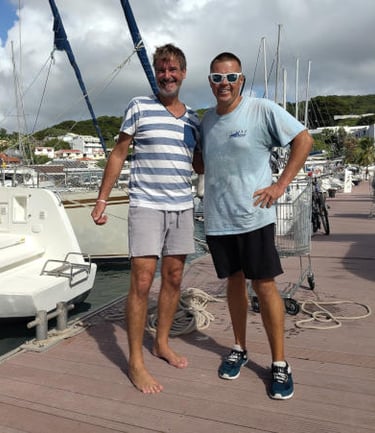
Timo from VPM Bestsail Charter
Telefon: +596 696-335224
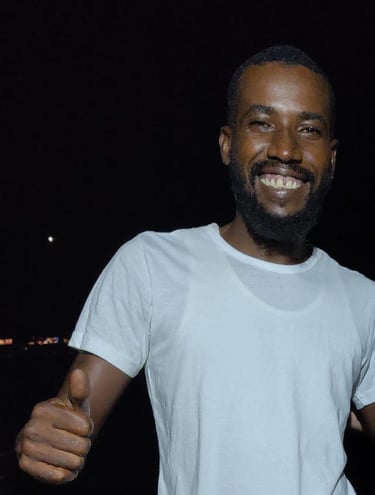
Timo (on the right in the photo) is one of the most helpful people I’ve had the pleasure of meeting during my many trips when taking over a yacht. Always willing to chat, always ready with a tip – a handover couldn’t go any better. It’s even better when returning the boat is also a collaborative process. And that’s certainly the case with him.
Recommended Contact
Itinerary
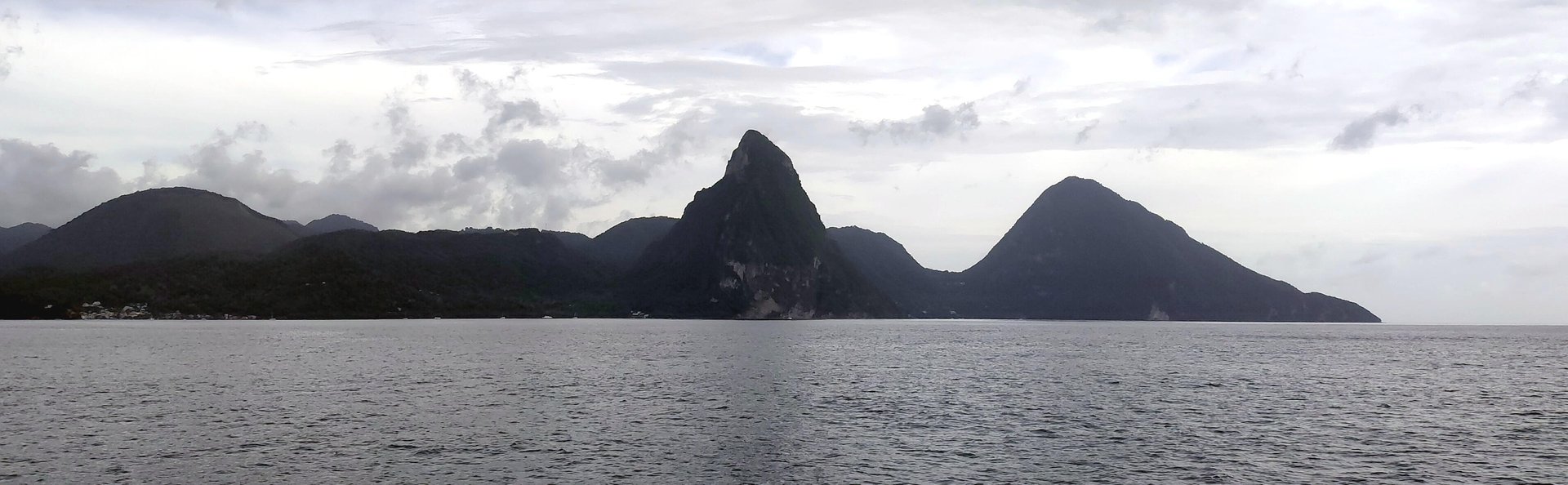
St. Lucia
The first destination is Rodney Bay on St Lucia. You should take a closer look at the exit from Le Marin beforehand; the IALA buoyage system here is Region B. This means that the red buoys are on the port side as you head out. This is particularly important as there is a shoal marker buoy situated in the middle of the channel to the west, between buoys MA7 and MA5. After passing the huge anchorage at Sainte-Anne and the countless ships moored there, you enter the Canal de la Martinique. Once we’ve rounded the headland, the wind really picks up; speeds of 20 knots and above are common, and we’re quickly heading for Rodney Bay on a broad reach, tending to run down the wind. It’s very comfortable; the return journey will be a bit different. It’s a great route to get used to the Caribbean Sea, and the distance isn’t too great. In the early afternoon, we take the dinghy to the beautifully appointed harbour to clear customs, having dropped anchor north of Gros Ilet at a depth of 5 metres.
As it turned out the next morning, it wasn’t a good idea. When we dropped the anchor, we’d already noticed that it wasn’t taking hold at first. Once it had settled firmly and hadn’t budged a millimetre even in 30-knot winds, I already had a inkling of what that meant. We can’t get the anchor loose. As we look at the dilemma – we can’t see the seabed, as the water is rather murky almost everywhere along our route – we see that a massive concrete block is caught on the anchor. I’m impressed that the windlass took it more or less in its stride. We quickly drop the chain three metres and start hauling it in again straight away. We were lucky – this time the anchor comes up without any trouble. Last year I anchored south of the marina entrance and had much better holding there.
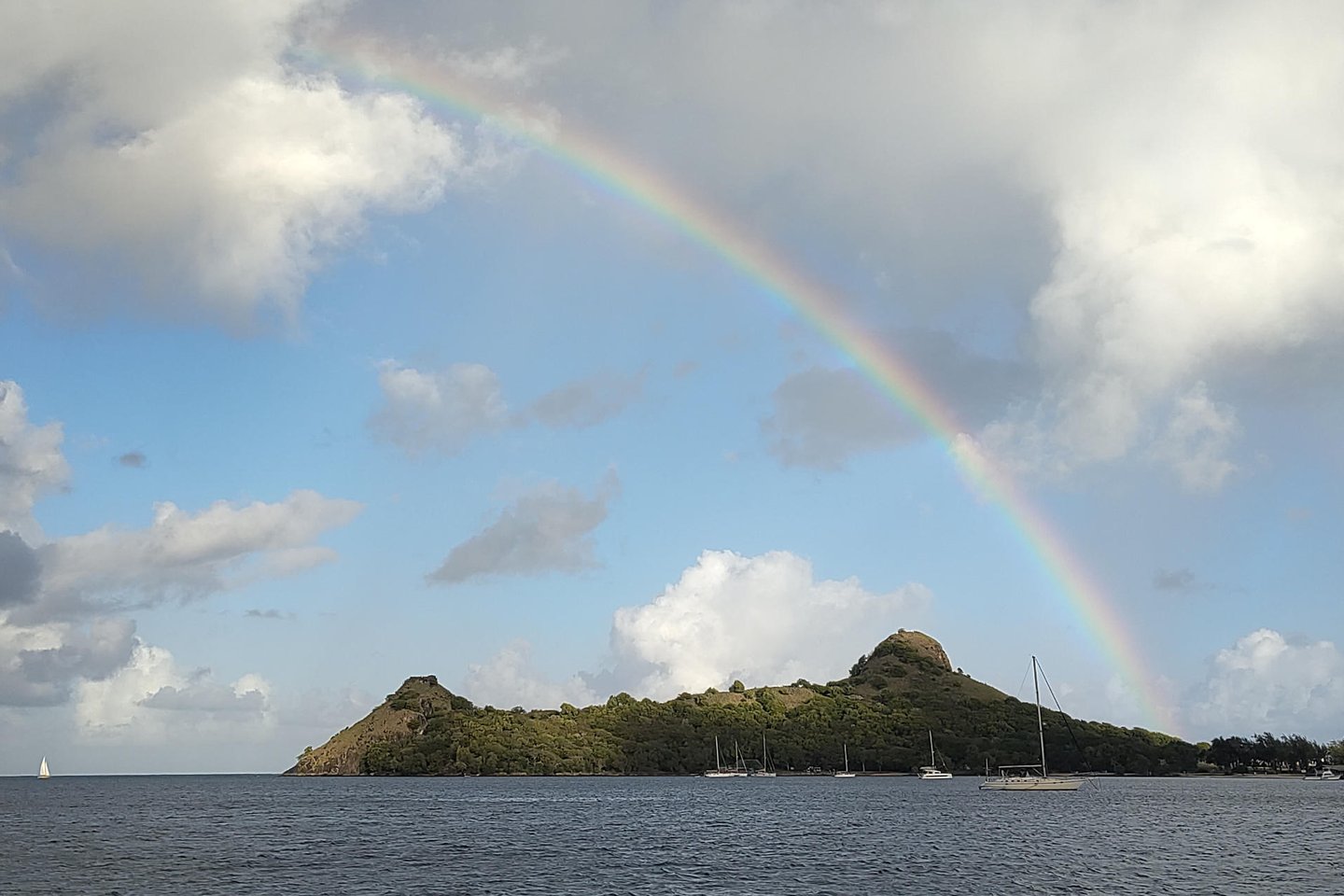
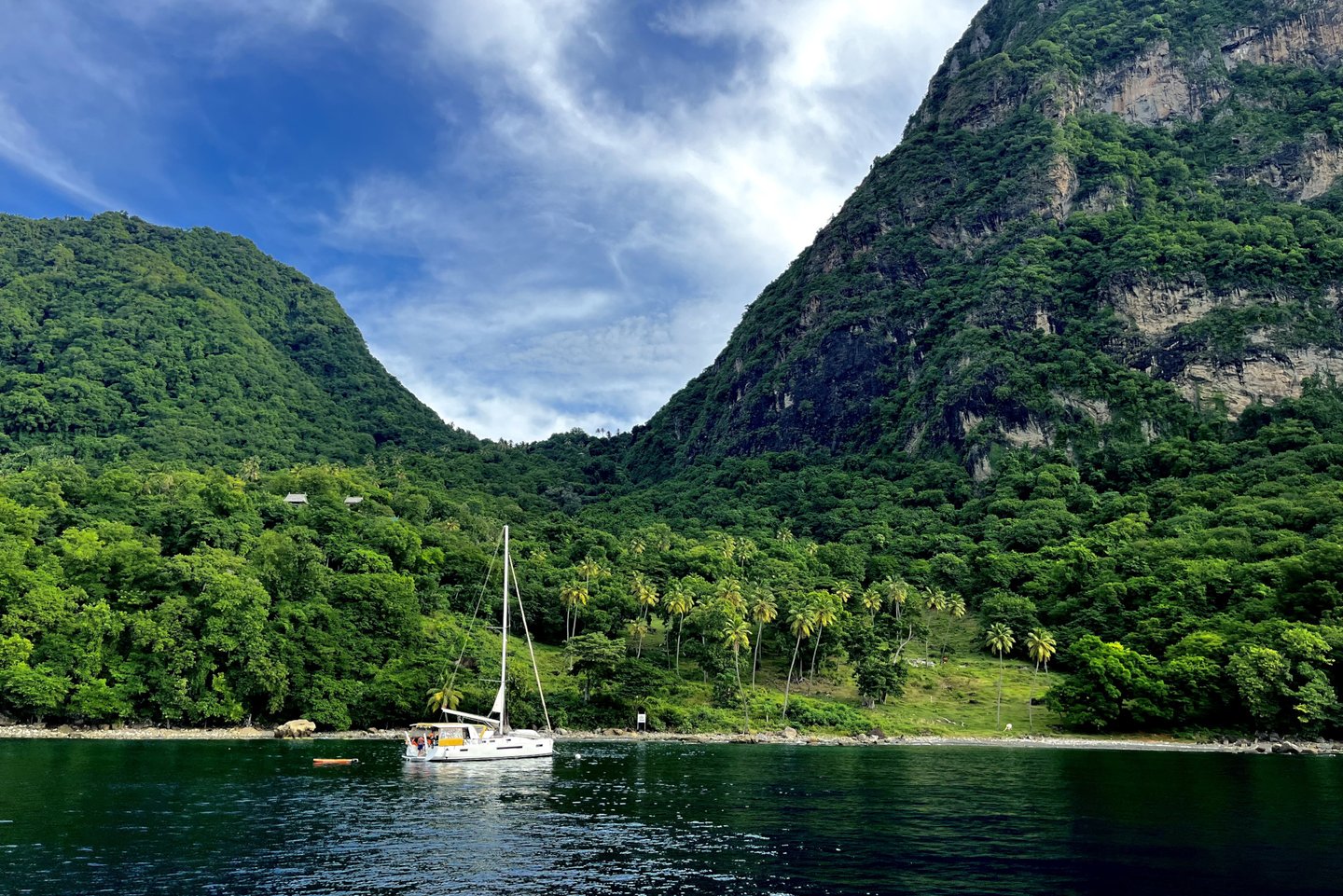
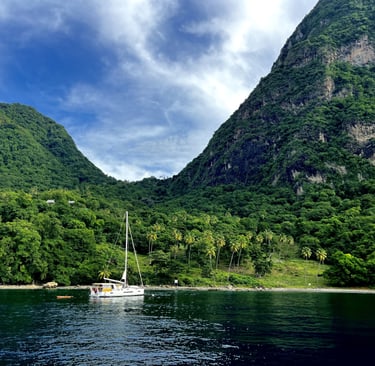
On a trip like this, I always find myself thinking about clearing in and out. For disembarkation, I choose Soufrière. After a lovely day’s sail along the western coast of St Lucia, we arrive at the island’s landmark, the two Pitons. And between the two, we are assigned a buoy. There are two bills to settle: that of the boat boy, who helps with mooring, and that of the St Lucia Marine Management Authority (SMMA), which collects the actual mooring fees. You can be sure the Boat Boys will offer us a barbecue straight away. Oh well, we go along with it, get picked up by a speedboat and walk a few more metres through Soufrière. There aren’t any tourists around there anymore, and we get a truly authentic glimpse of what life is like there. The barbecue’s fine, but then there’s the request to chip in for the family and other little things. That’s just how it goes. And if you don’t see it as a rip-off, but are aware of the financial privileges you enjoy, it can actually make you happy.
The next morning, we’re picked up again to get our passports stamped for departure at the police station. The office is closed; there are just a few people waiting. And some locals who’ve turned up as well. After half an hour, someone hands me a phone and I speak to the officer. After I’ve explained what we’re planning to do, he eventually says, “You can go”. Really? “Yes, you can go.” Whoever handed me the phone – whether that officer was actually the right one – I have no idea! But we’re off.
Even on the way back, the price negotiated in Caribbean or US dollars turns into a request for extra payment because of the wait. I’ve got a few German national team shirts from various tournaments with me that I don’t wear at home. And these football shirts are hugely popular here. We can leave our wallets in our pockets and put a smile on their faces.
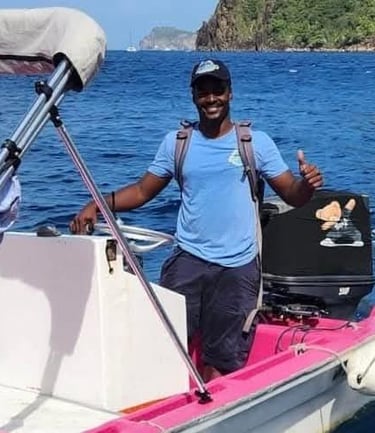
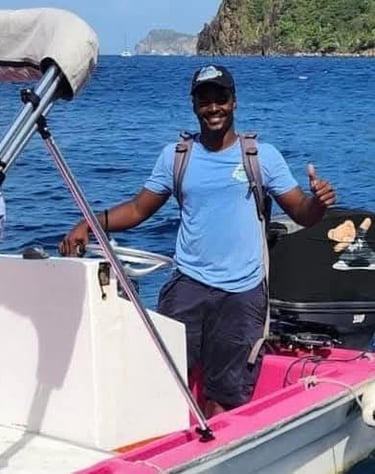
Jahleel
Phone: +1 (758) 726-0904
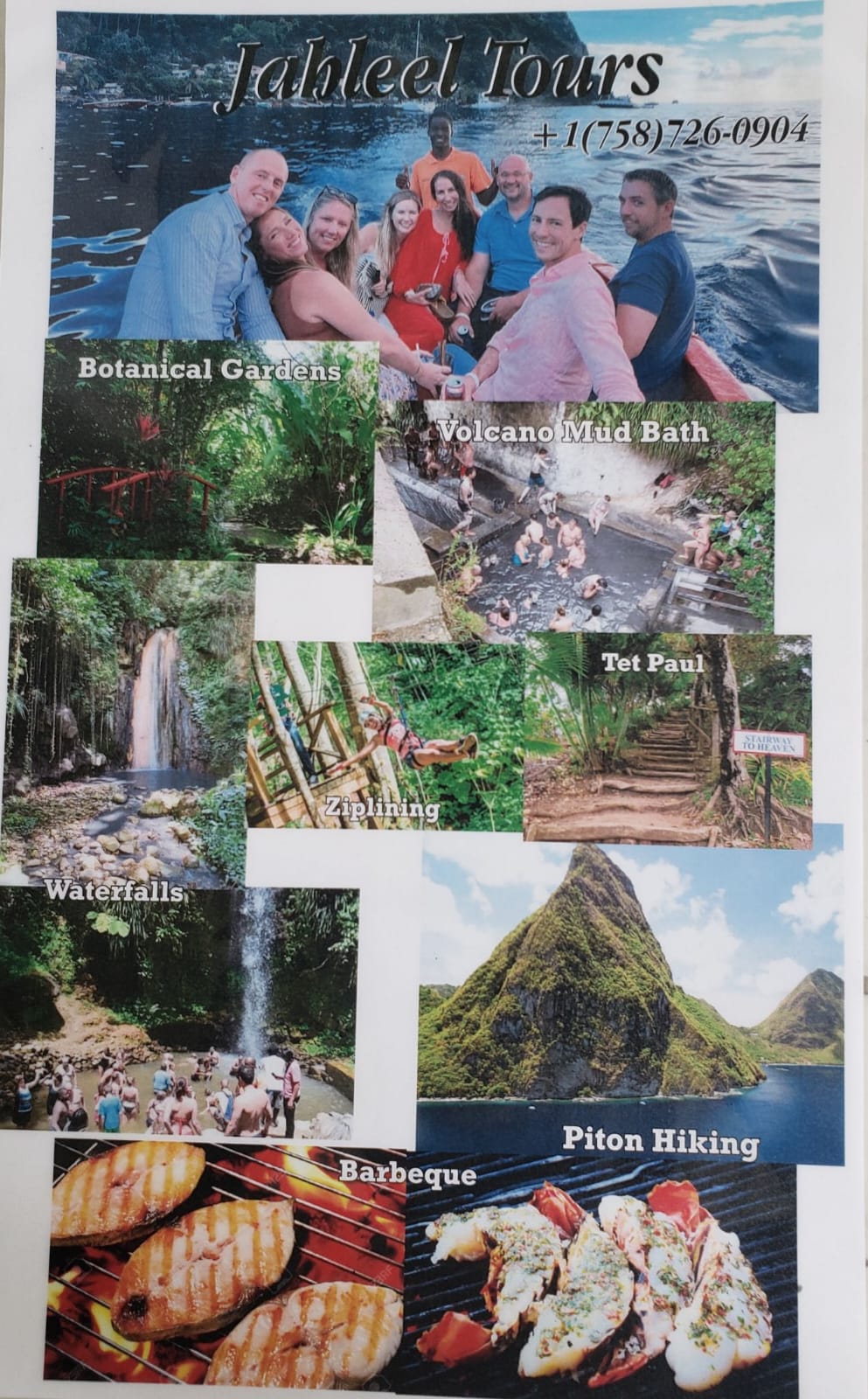
Jahleel Guided Tours and Yacht Service organises tours on St. Lucia and is available to offer you advice and assistance. He has outlined what there is to see on the tours in this flyer.
Recommended contact
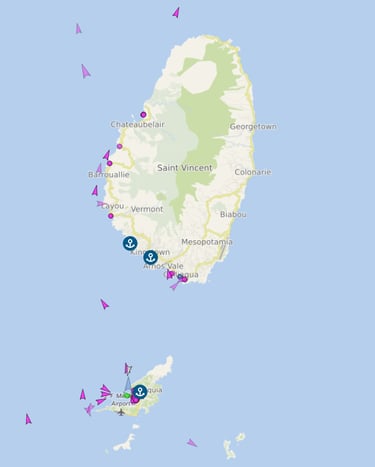
To give you a complete picture of St Lucia, I’m moving away from the usual chronological account and will now introduce you to some other places worth visiting that we saw on our return journey from St Vincent. If you’d like to follow the rest of the tour, click here for the crossing to St Vincent.
St. Lucia, Part 2 - the coming back
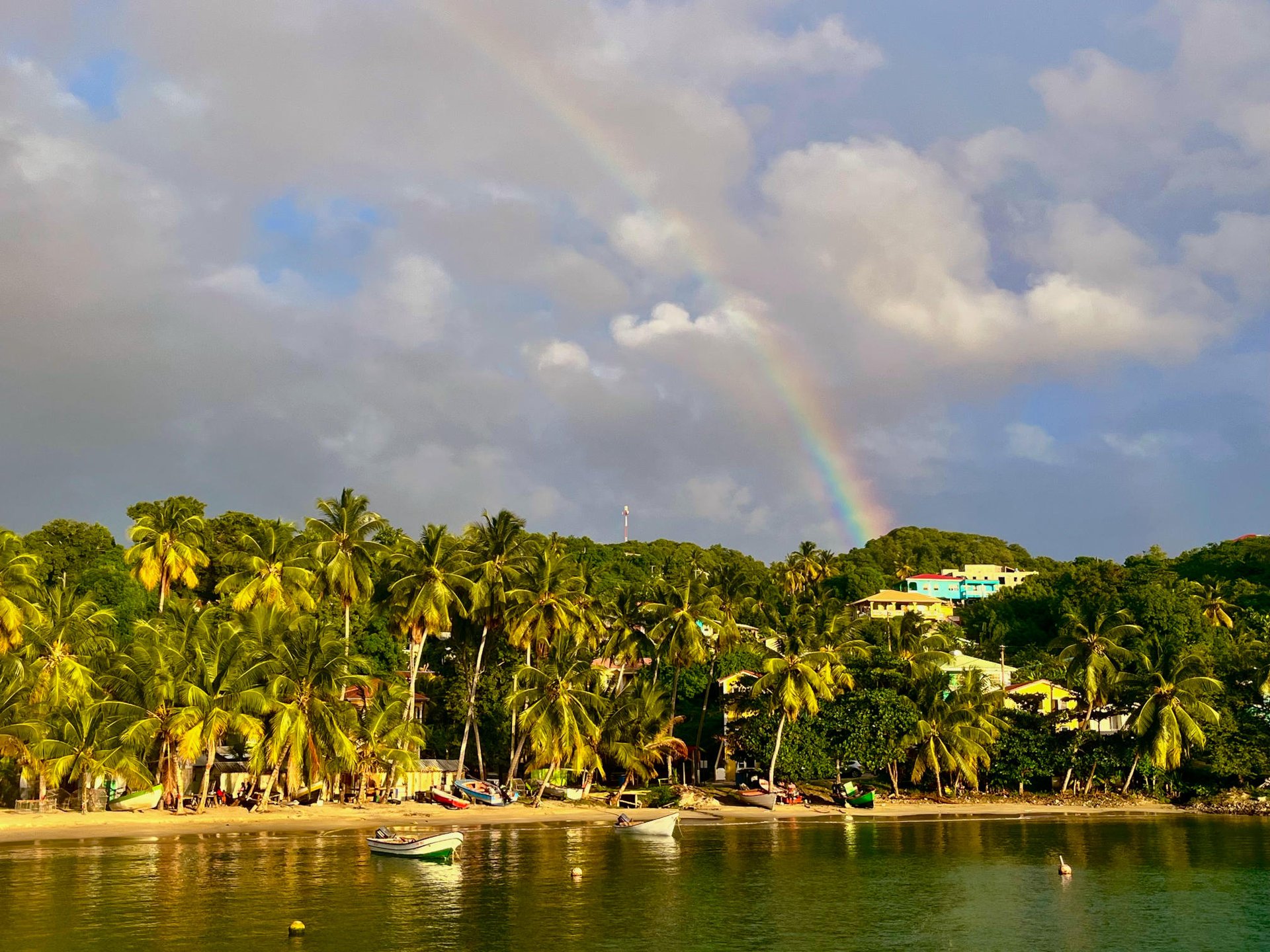
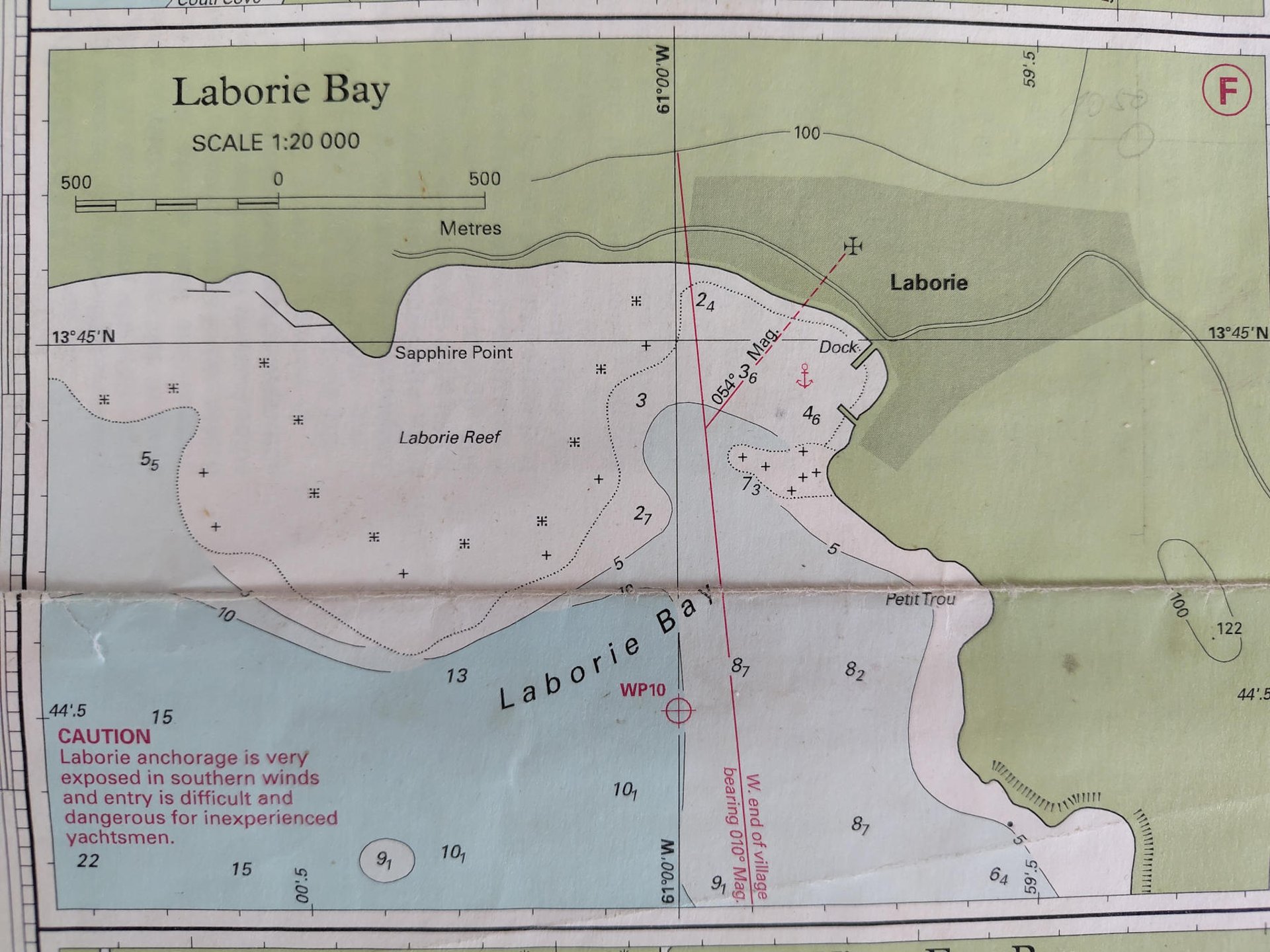
Our destination is Laborie Bay. As mentioned, it’s often overlooked on the usual itinerary, but entering the bay with its reefs and the inaccurate information on nautical charts and Navionics makes for a real adventure. Just like last year, John Junior picks us up in his boat and guides us through the bay to our buoy, one of two moored there. Whereas last year he was still in a worryingly poorly inflated dinghy, he now welcomes us aboard a proper motorboat. He also has a trainee on board. Business seems to be going well. He tells us that the place is experiencing a small boom thanks to tourism. But it’s still a real gem and a hidden gem. Our shore leave takes us to Mama Tilly’s restaurant. And it’s still extremely rustic, with few comforts and no luxury. For me, that’s the real luxury.
First, a real insider tip: there’s a well-hidden tap at the jetty. We top up our water supplies again and I give John Junior a fair wage. I reckon he doesn’t pay for this water himself, but he’s been on board with us for 20 minutes, holding the hose.
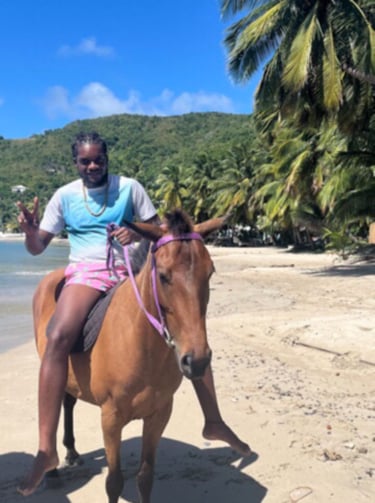
John Junior
Phone: +1 (758) 729-0628
Be sure to contact John Junior before entering the harbour so he can guide you through the reefs. He’ll then assign you one of his buoys, which you should book in advance by phone. He’ll sort out provisions or even a table at Mama Tilly’s, where you can really immerse yourself in Caribbean life and enjoy some fantastic homemade rum.
An extraordinary experience – don’t miss it!
Recommended contact
A visit to Marigot Bay is a must when in St Lucia. The famous original hotel from the 1967 musical film Dr Dolittle can be admired there. The entrance and the scenery there are stunning. You can also go through customs there. The harbour facilities are pleasant, even if there are many Americans there who detract from the atmosphere. From there, it is also possible to organise a day trip; the boat boys will certainly approach you about it.
A man calls himself St. Nicholas will probably pay you a visit there too. At least in the run-up to Christmas, he paddles up on a stand-up paddleboard laden with fruit and tells us with a smile that his name is St. Nicholas. He knows enough German to strike up a conversation with us. It’s hard not to buy something from this charming chap.
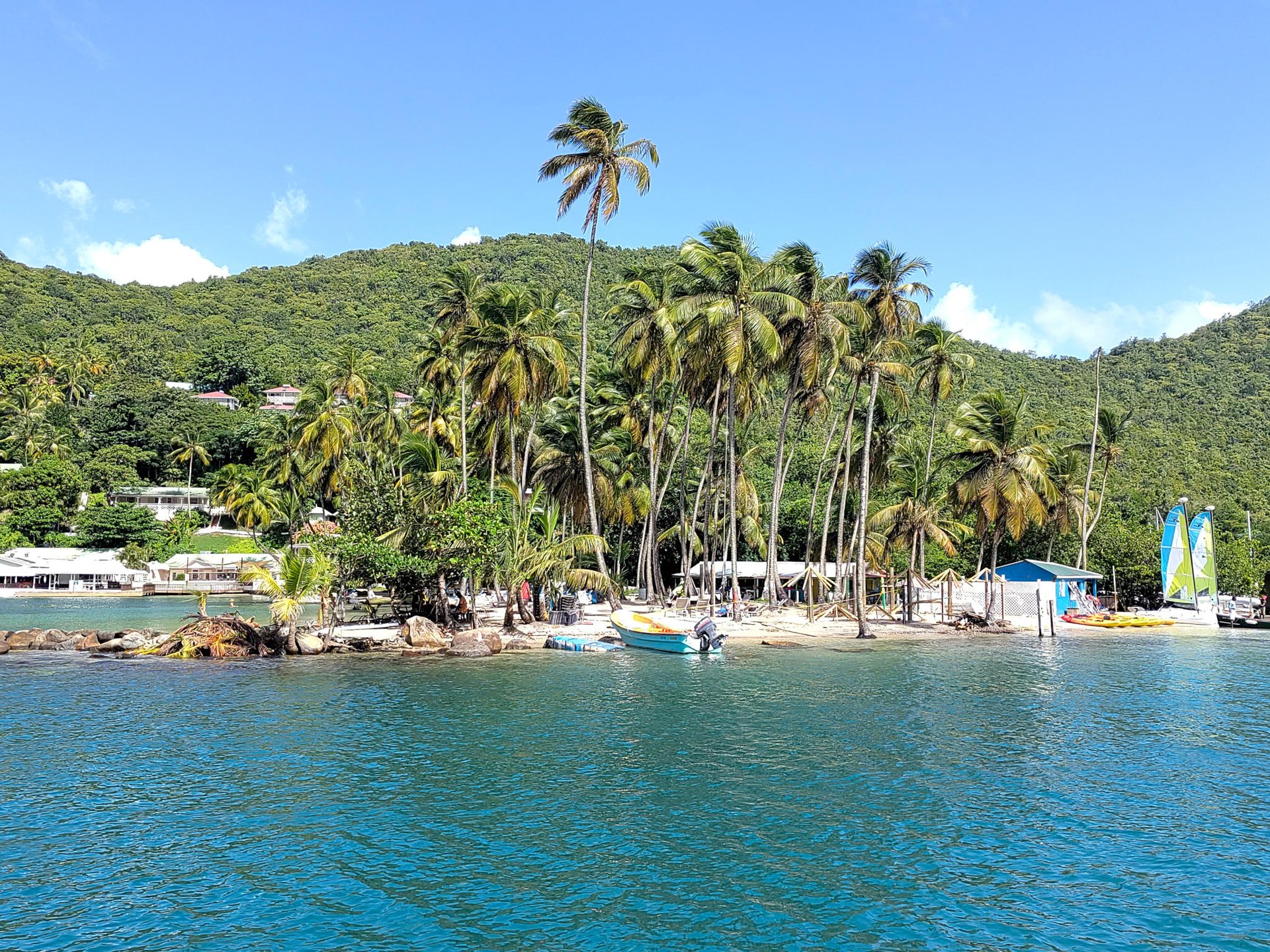
During the day, the bay is very lively. There are lots of taxi boats ferrying guests to the small beach with a bar. If you have a mooring in front of the harbour – which I would recommend because of the short distances involved – you can also swim out to the beach and enjoy a sundowner.
What’s more, we’ve found a technician here – Imbart +1 (758) 726 1401 – who was able to repair our faulty water pump. He went out of his way to help and charges a reasonable price.
St. Vincent
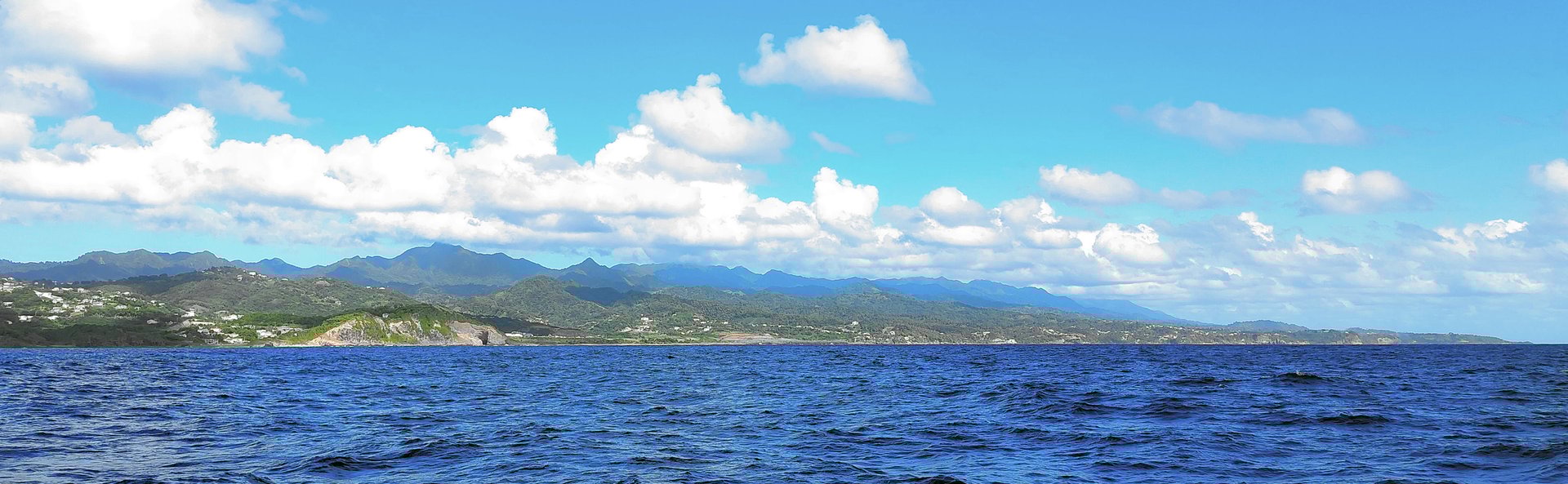
Once we’ve set sail, we can both feel and see the current – or rather, the eddies – around the south-western coast of St Lucia. It looks eerie when the appearance of the water changes so dramatically as we sail through it. After rounding the coast, we make good time towards the main island of St Vincent, which appears even more unspoilt and wild than St Lucia. The crossing is once again a relaxed affair, though unfortunately there are no dolphins or whales to be seen this time. Last year we spotted two young sperm whales swimming past us – a truly impressive experience of nature. Even the dolphins weren’t on our side this time.
The boat boys approach you well before you reach your intended destination and try to lure you to their mooring spots. When I point out that I’ve already made arrangements with Zico and have a berth, they reply that they are Zico. Nice try… I don’t forget a face from last year that easily.
Two other boat boys are also verging on the borderline of impudence and are rather a nuisance. Here, it’s important to exercise tact. One thing that’s sure to cause trouble is taking their photograph without asking. We’ve already had this experience in Rodney Bay, when the crew took a photo of a fruit seller’s beautifully decorated boat without buying anything.
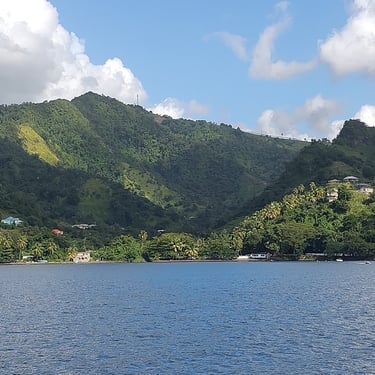
St Vincent feels more unspoilt, wilder than St Lucia. So it’s a relief to have a safe mooring at Keartons Bay, secured by two buoys. And to know that Zico is already ready to welcome us.
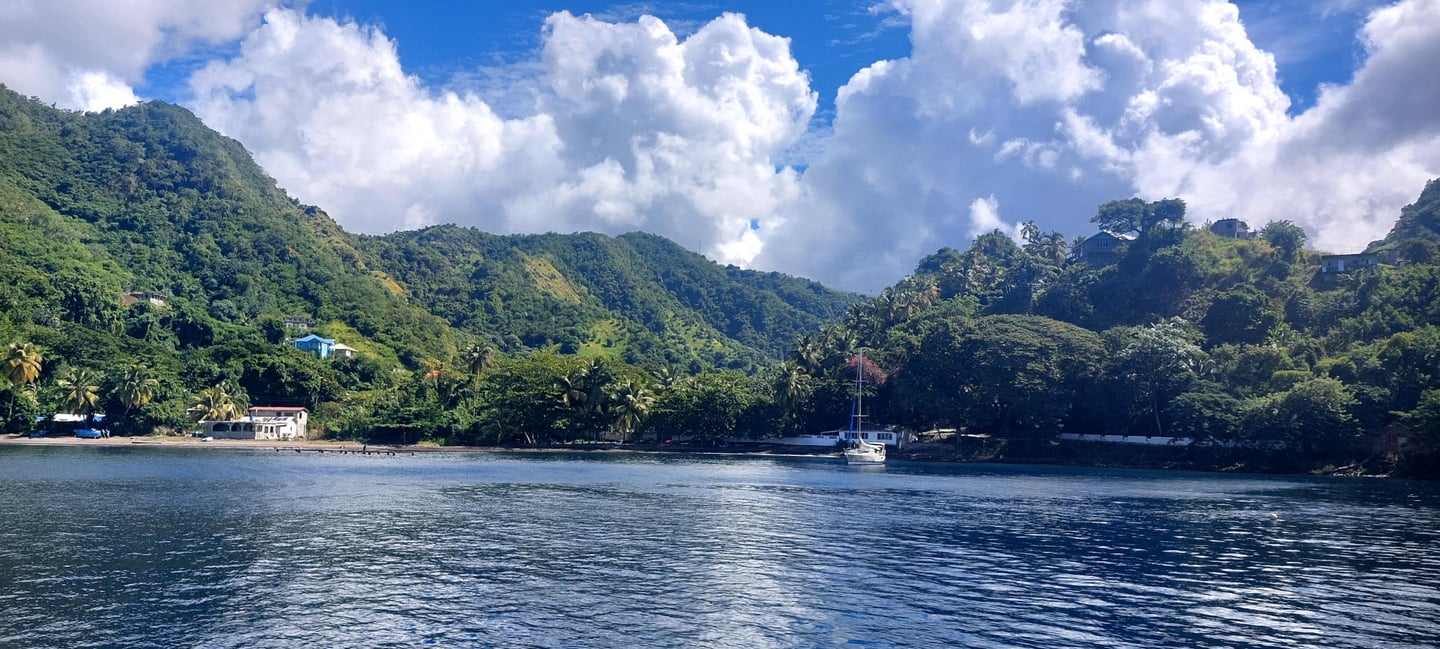
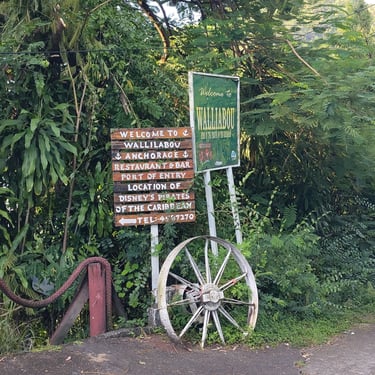
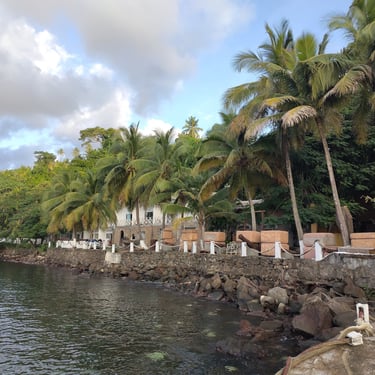
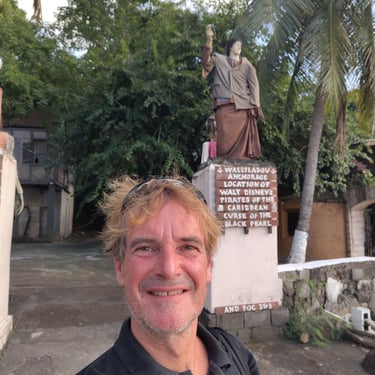
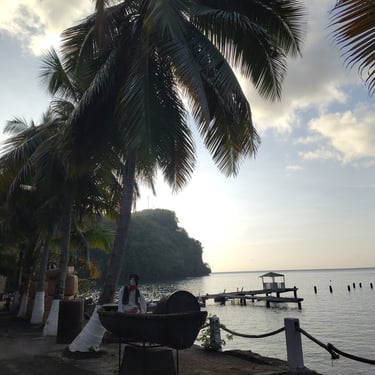
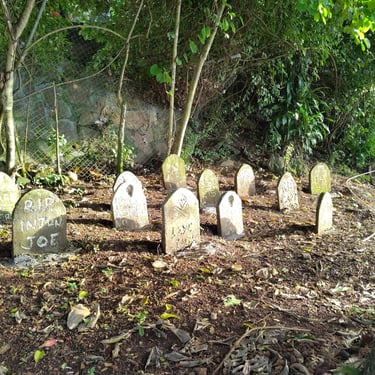
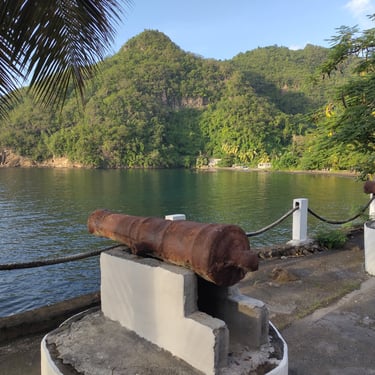
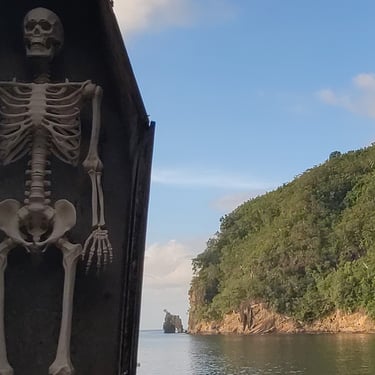
In Keatons Bay, next to the famous Wallilabou Bay where some scenes from Pirates of the Caribbean were filmed, we moor our catamaran with Zico’s help and, shortly afterwards, go ashore after a snorkelling trip. His mother serves us Caribbean specialities again at her home. I am given a Labour Party wristband, a red party wristband. Without giving the political circumstances a second thought, I wear it on the rest of the trip. At least one day.
We’re heading on to the Grenadines now; otherwise, here’s a brief account of our return journey from St Vincent.
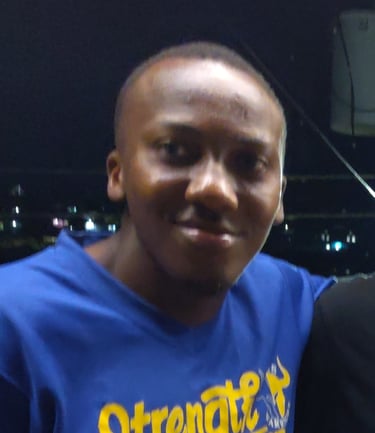
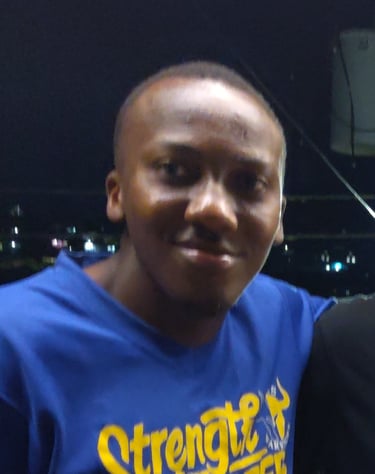
Zico
Phone: +1 (784) 491-9608
Zico helps you find a safe berth, offers you a fantastic authentic Caribbean dinner at his mother's house for a small price and takes care of everything you need. He even arranges an appointment for customs clearance in Wallilaboy Bay.
Recommended contact
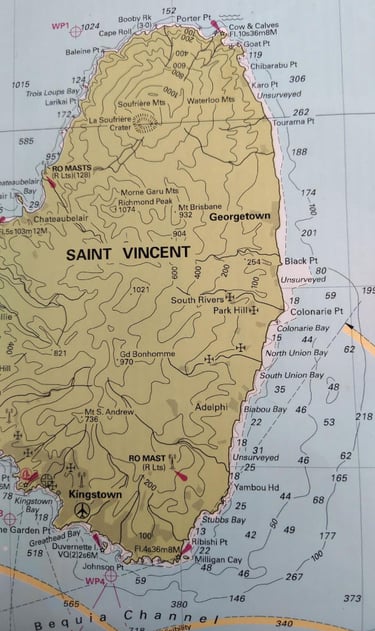
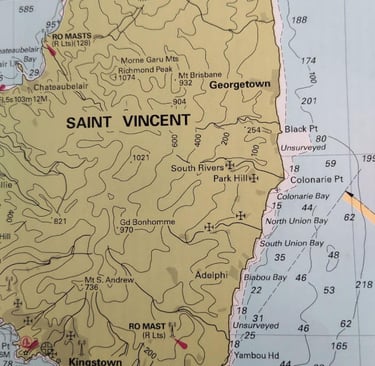
To round off the report on the main island of St Vincent, here are some impressions from the return journey. This time, we’re not stopping at St Vincent. And as our destination on St Lucia – Laborie Bay – lies quite far to the east, we’re venturing along the eastern coast. It feels like an adventure. Here you can feel the unbridled power of the Atlantic; parts of the coast are not marked on the nautical chart – you don’t come across anything like this in Europe. We’re keeping our distance, but the water depth rarely exceeds 20–30 metres. We’re on our own; the usual regulars are all ashore. I feel as though I’m discovering uncharted territory, even though we’re not exactly sailing past a small village with the Georgetown.
As expected, the swell is particularly rough in the St Vincent Channel. We don’t want to tack too early, so as to maintain a safe distance from the shore. The wind, which already seems to be light on the western side of the island, is just about strong enough for our journey. And we experience first-hand that even on the windward side of an island there is a wind shadow – or rather, a lull in the wind.
After leaving St Vincent, we can make out St Lucia on the horizon, despite a few patches of rain. Of course, we end up getting caught in a proper downpour.
The Grenadines
As we didn’t clear customs at Keartons Bay (there would have been an option to do so at Wallilabou Bay, but I wasn’t able to manage it last year, so I decided not to try again), we’re catching up on this in Port Elizabeth on the island of Bequia (pronounced ‘Backway’). We’re a bit surprised by the amount we have to pay. It cost five times as much as it did in St Lucia. Otherwise, it’s a great town where you can still do a bit of shopping. And there is the option of topping up our dwindling water supplies. To do this, we have Miranda’s famous green boat come alongside. She could also do the laundry and bring it back the next day, if necessary. It’s not exactly cheap, though; topping up the water supplies costs over 100 us dollars.
Back on land in a bar, I realise that no one else is wearing a red wristband – everyone else has a yellow one. I have to get to the bottom of this. It is made clear to me, in no uncertain terms but in a friendly manner, that I am wearing the wristband of the wrong party in the presidential election. In no time at all, the red wristband has disappeared into my pocket and I am wearing a yellow one. Of course, I ask for an explanation. The yellow wristband signifies membership of the New Democratic Party (NDP). And why do people on the islands tend to wear yellow? It seems the previous government focused mainly on the main island of St Vincent and did not provide the Grenadines with adequate support. This was apparently a mistake. After two days, it was clear that the NDP had won and that the future president would be Godwin Friday. Wherever I go with my yellow wristband, I’m sure to be greeted with a beaming smile.
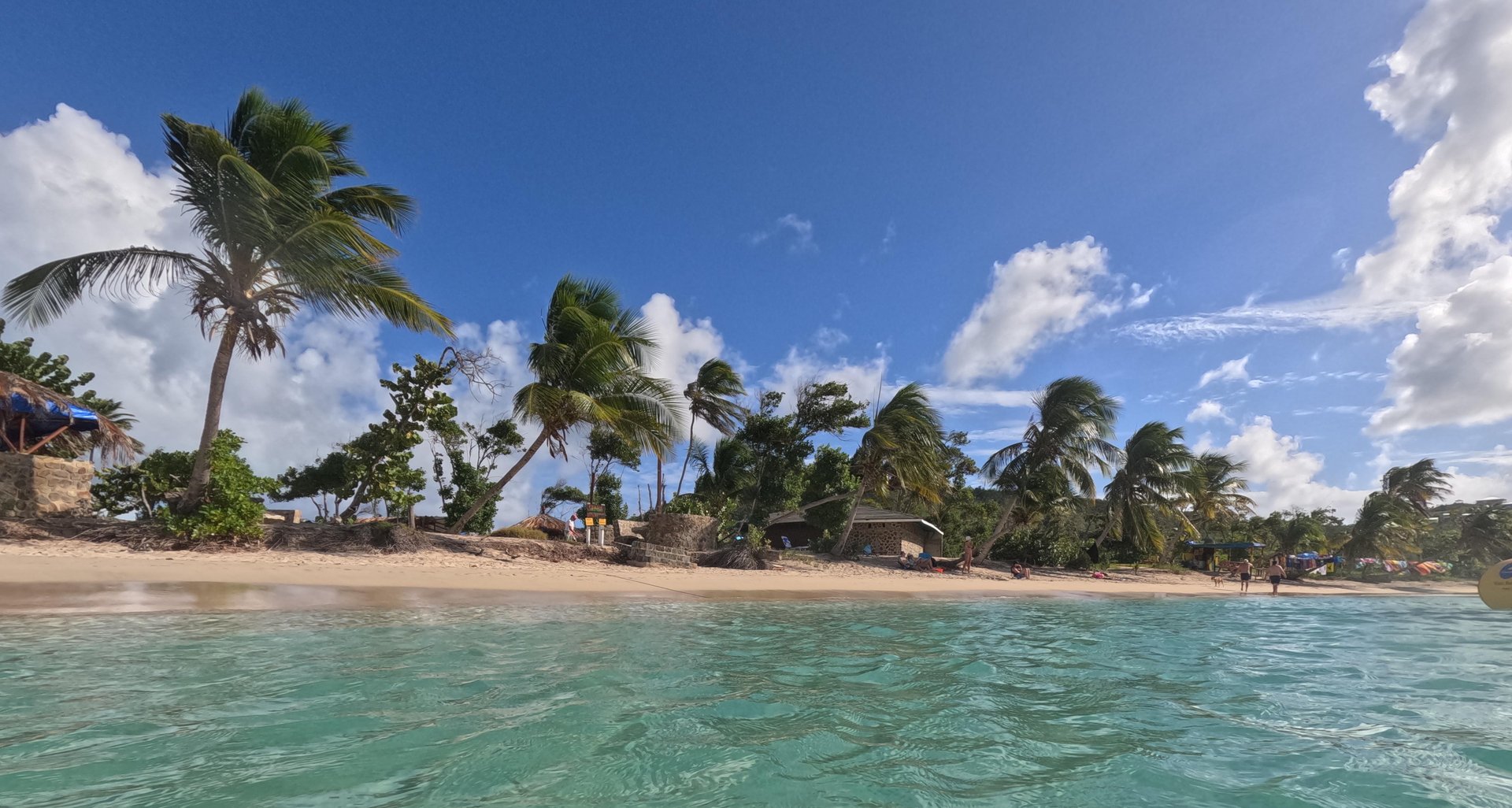
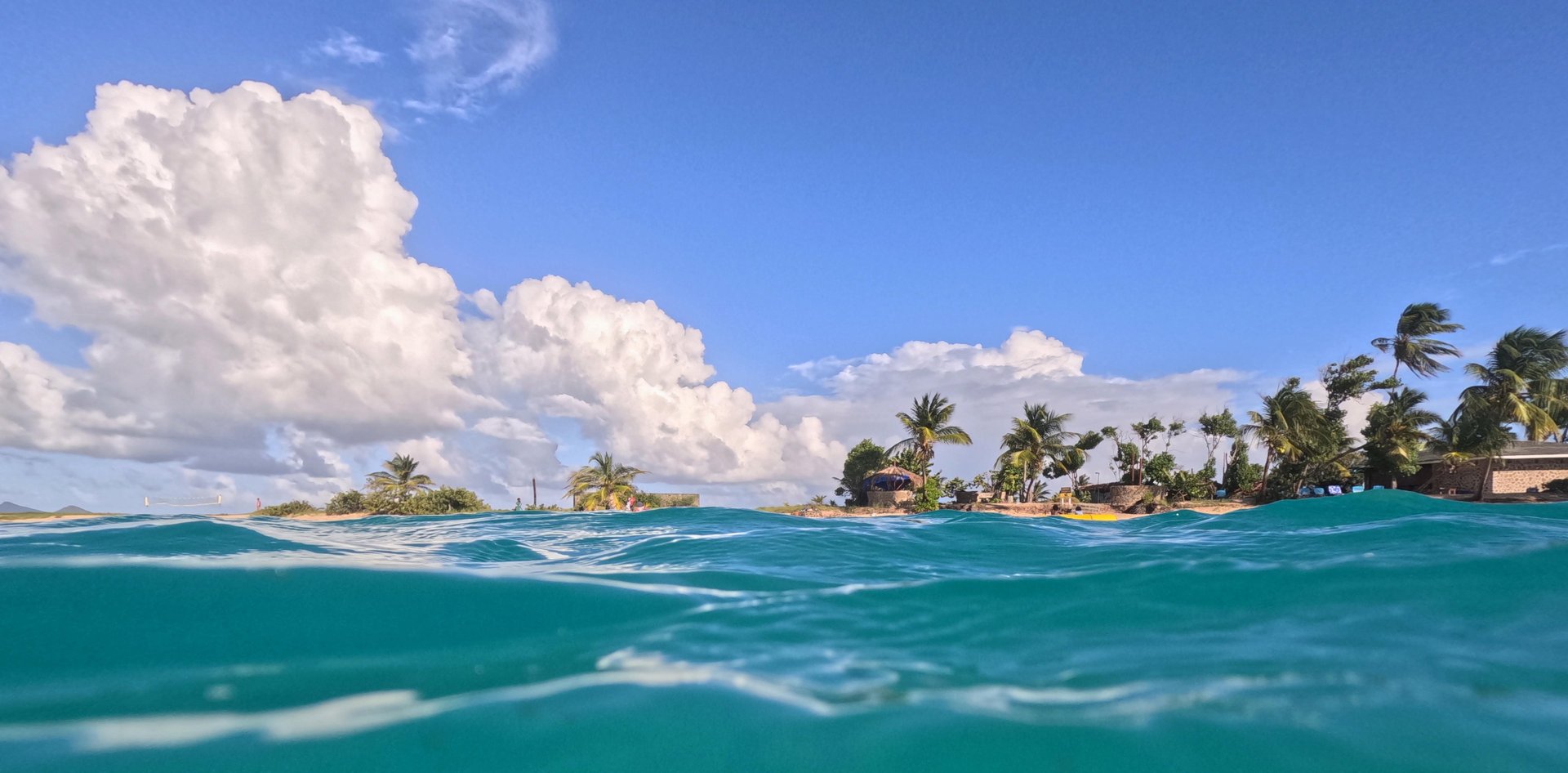
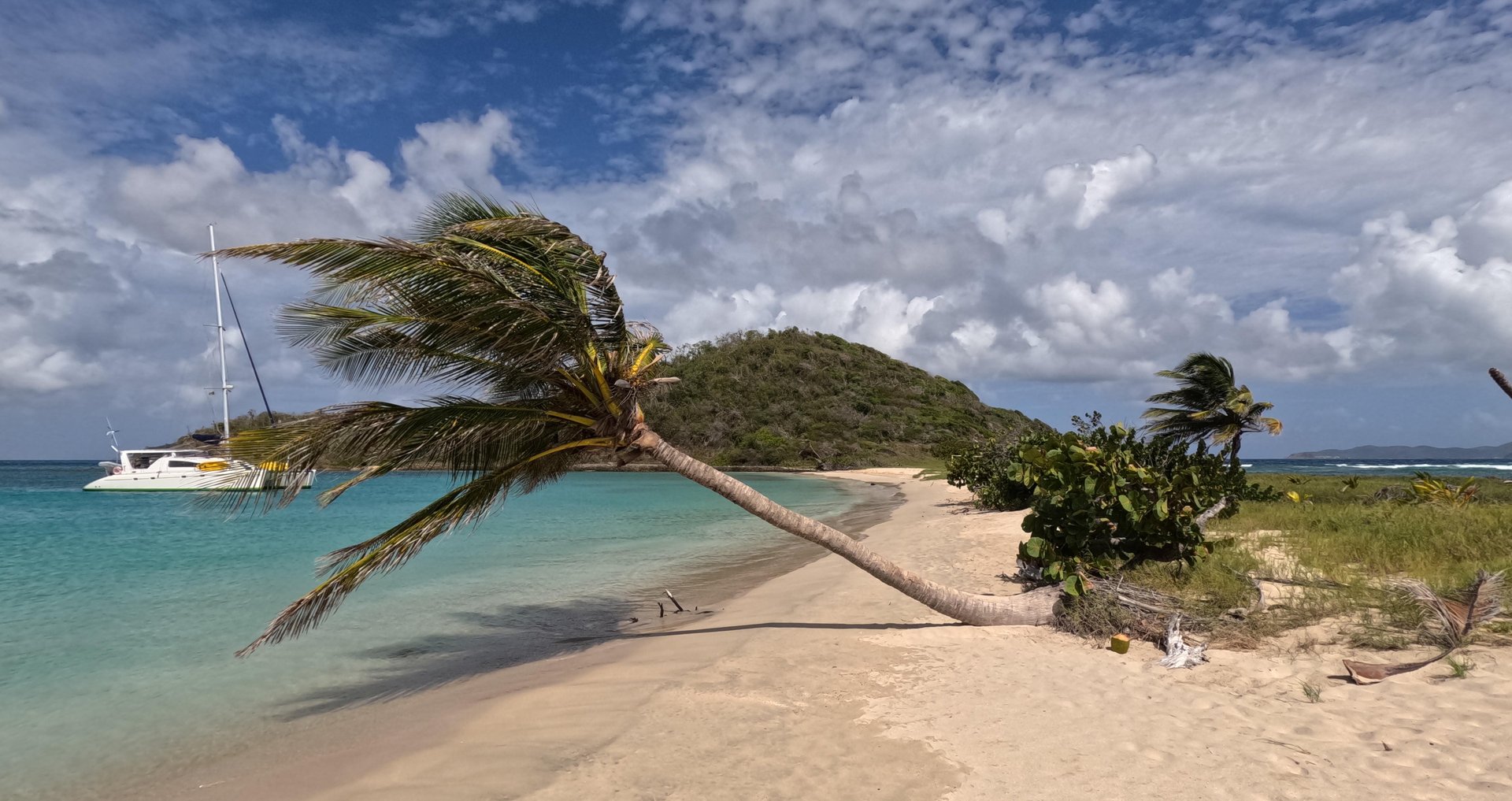
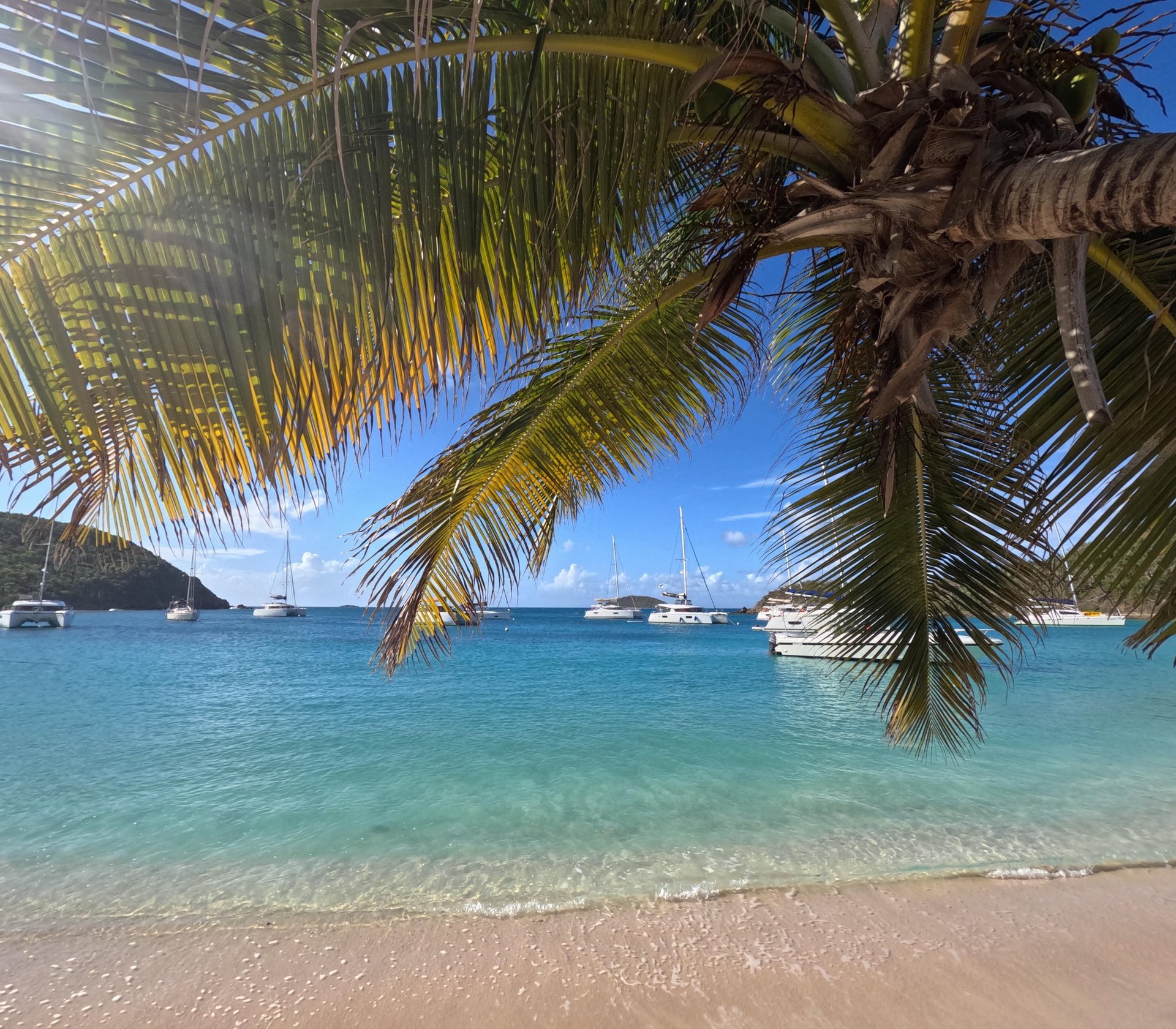
The route now takes us to the island of Mayreau, which perfectly embodies the Caribbean island stereotype. We moor in Salt Whistle Bay. Here, too, I’ve made contact with an incredibly friendly local who helps us tie up to the buoy. As usual, the park authority is responsible for collecting the fees and he isn’t allowed to reserve a buoy for us, but as luck would have it, the best buoy – the one closest to the beach – is free. In the evening, we go to Jay’s for red snapper and, once again, we’re the only guests. It seems a bit odd, considering that the island of Mayreau was severely damaged by Hurricane Beryl. The people there have lost everything they own and need our support to get back on their feet. And it seems to me to be a great way to make the most of the local restaurants rather than just sitting around on the catamaran in these stunning surroundings.
Jay
Phone: +1 (784) 434-1660
Salt Whistle Bay is famous and very popular. It’s highly recommended to get in touch with Jay beforehand. Even though he’s not officially allowed to reserve buoys, he always has a trick up his sleeve.
Enjoy a red snapper dinner at him in the evening and the day couldn’t end any better!
Recommended contact
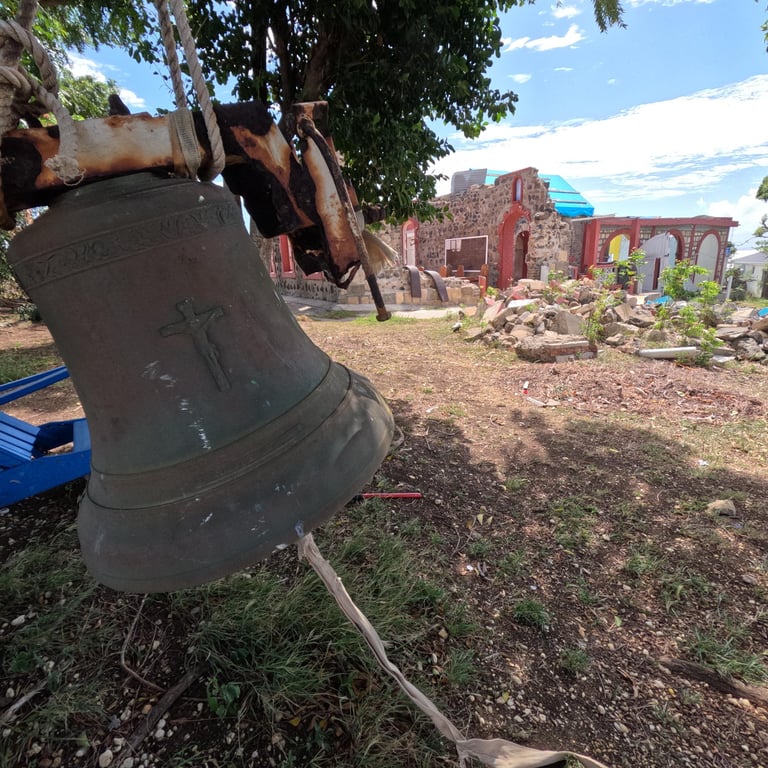
The surroundings are so beautiful that we decide to spend another day there. A steep path leads to the only village, Old Wall. You can still see the damage the hurricane caused to almost all the houses. But many bars have now reopened, so we can enjoy a Caribbean day with a bit of sightseeing.
Don’t miss the Tobago Cays – they’re the highlight of the whole trip. After a short detour to the coast of Grenada, we try to head east towards our destination. But the current soon makes it clear that we’ve hardly a chance. This is where the lack of a keel on a catamaran and its poor upwind performance really come to the fore.
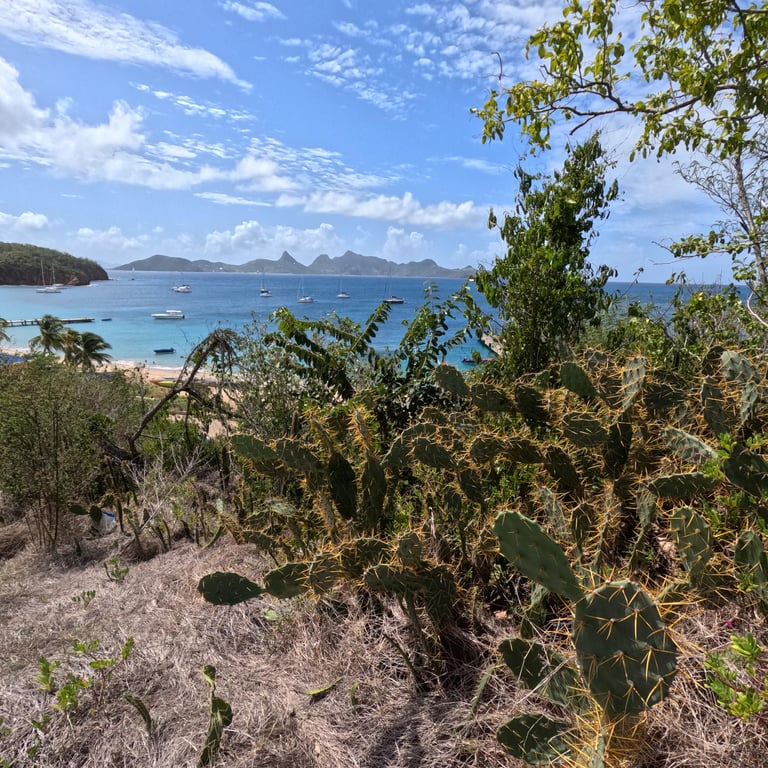
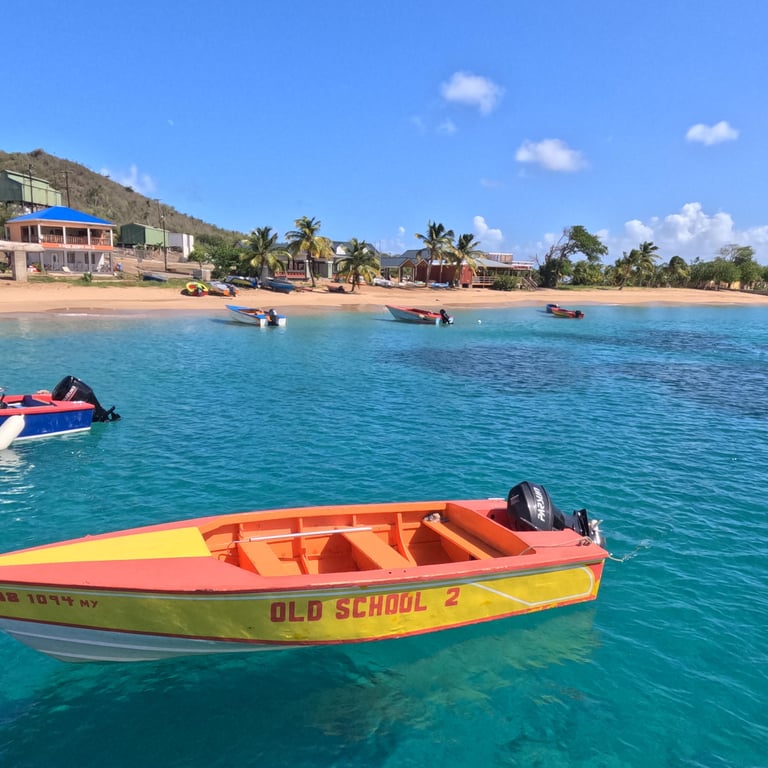
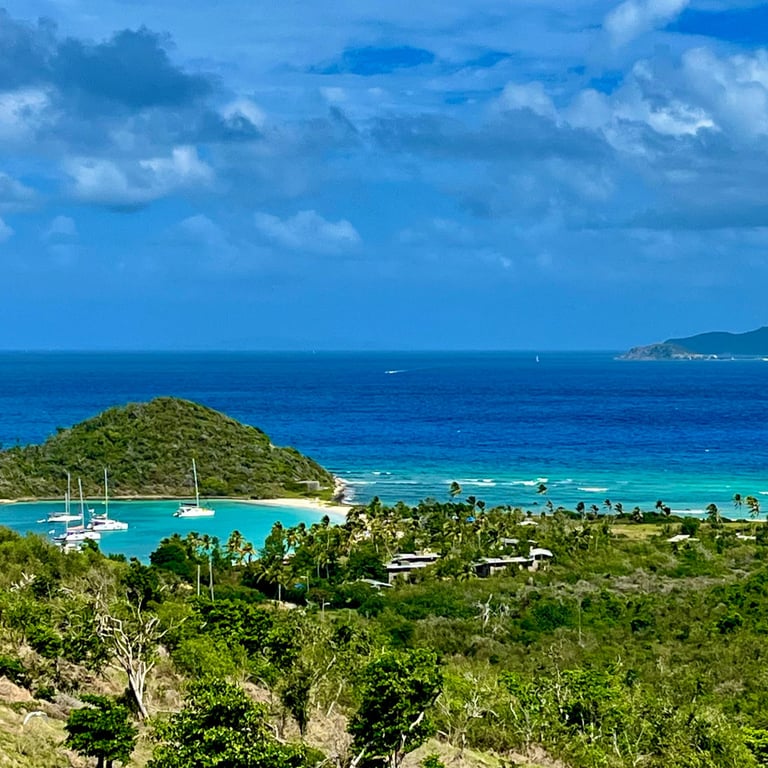
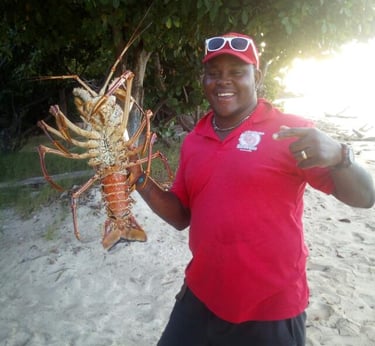
The entrance to the small islands looks a bit eerie; you can make out the reefs and the gentle surf lapping against them. But the channel is wide enough that there’s no need to worry. In the evening, we’ve made a booking at Romeo’s Lobster; sure enough, Romeo turns up just as we’re about to choose a buoy near the island of Petit Bateau. He greets me by name; we recognise each other from last year. What service, and what a pleasure it is to receive such support. The current around the cays is very strong. I make a point of warning snorkelling guests about this several times, as last year a sailing guest was swept so far out that he had to be brought back by dinghy.
After a short walk across the island, we find ourselves back on the beach to round off the evening. The crew are absolutely delighted with the lobster – highly recommended.
Tobago Cays
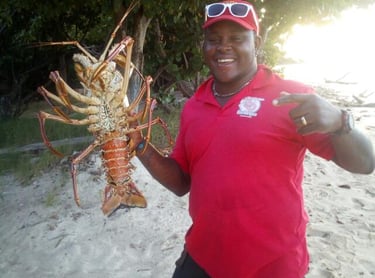
Romeo
Phone: +1 (784) 531-1200
A unique setting, fantastic food – simply a must-try experience. This is the only place on the island where you can dine out. Not only is the lobster superbly prepared, but the side dishes also leave nothing to be desired. Book well in advance to ensure a wonderful evening. The yacht can be moored nearby at a buoy or suitable anchorage.
Recommended Contact
SIM-Card
There are various providers offering both data and call allowances for smartphone use. There are often one- or two-week deals available. You do need to check carefully whether the offers cover St Lucia and St Vincent and the Grenadines. I ended up scraping by on St Lucia myself, as I couldn’t get the eSIM that my skipper wanted to use activated. The eSIM from the provider Simovo worked perfectly in St Vincent (apart from the fact that I had to remind them again to send the QR code, which was sorted out quickly).
Cash/Payment Methods
Exchange some cash into East Caribbean Dollars (XCD, pronounced ‘i ßi’). You should always have a tip for the boat boys to hand. The further you go into the Grenadines, the more important this currency becomes. You can also pay in US dollars, though the exchange rate is a matter of negotiation. We were also able to pay with euros everywhere, but the rate is no longer advisable. It also feels a bit odd paying in euros on deserted islands under palm trees. Card payments are only occasionally accepted in larger towns. I was also able to pay our customs clearance fees by Visa card.
Nature and Landscape
The Caribbean myth conjures up images of snow-white beaches. And yes, you’ll find them in the Grenadines. But to get there from Martinique, you have to sail past two volcanic islands. There are no white beaches there! Discuss this with your crew beforehand – you never know what a tour operator might have suggested to them. And remember that these legs are great for a fun sailing trip, but if you happen to have someone on board who isn’t particularly interested in sailing and is more keen on swimming: there’s no island-hopping here. Cut them loose straight away. What sailor hasn’t been there: grumpy guests who are just waiting for the next chance to go for a swim. They’ve booked the wrong trip!
Formalities
Make sure you’re well prepared for customs and immigration. There are a few things you can sort out from home. Typing in passport numbers can take up a lot of time. Fortunately, things in St Lucia are no longer as they were in 2024: a barely functional website used to require you to photograph your passport photos again and upload them. If that failed, you had to start all over again from scratch. How lovely that you’re now served in person at the customer service office again!
Ressources
It’s important to realise that water on a yacht isn’t an endless resource like it is at home. You don’t need to shower three times a day. Water is a precious commodity and isn’t easy to come by in the Lesser Antilles. What’s more, it’s expensive.
Helpful Tips
Contact
Write me
+49-162-5401120
© 2026. All rights reserved.
Social links? No Facebook, no X, no Instagram. These platforms have no place in my world.

Google Ads and Google Analytics free site!